2026 Best Braided Copper Cable Suppliers for Global Buyers

Time:2026-09-25 Author:Charlotte
0%

In 2026, global buyers need suppliers that can deliver dependable quality, clear documentation, and practical support across borders. Finding a reliable Braided Copper Cable supplier takes more than comparing unit prices. Cable performance depends on details such as braid coverage, wire diameter, strand count, copper grade, and whether the braid is bare or tinned. These choices affect flexibility, conductivity, corrosion resistance, and suitability for the intended installation. Small differences add up.

This guide helps buyers assess suppliers with specific, verifiable questions. Can the manufacturer provide drawings, material specifications, and test reports that match the quoted product? Are sample cables available for checking dimensions, finish, and handling before a larger order? Buyers should also confirm production capacity, lead times, packaging, and how the supplier handles quality issues. A responsive contact matters. So does consistent communication when schedules change.

Supplier selection is rarely perfect. A polished website alone cannot prove stable production, and even careful comparisons can miss a problem that appears only after delivery. Requesting samples and reviewing relevant quality records can reduce uncertainty, though no single check guarantees a trouble-free order. The sections ahead compare supplier capabilities, product options, and sourcing considerations for international buyers. They are intended to support informed decisions, not replace technical review. Clear requirements make conversations easier. Ask for evidence, compare like with like, and leave room to reassess when a supplier’s claims do not match the cable in hand.
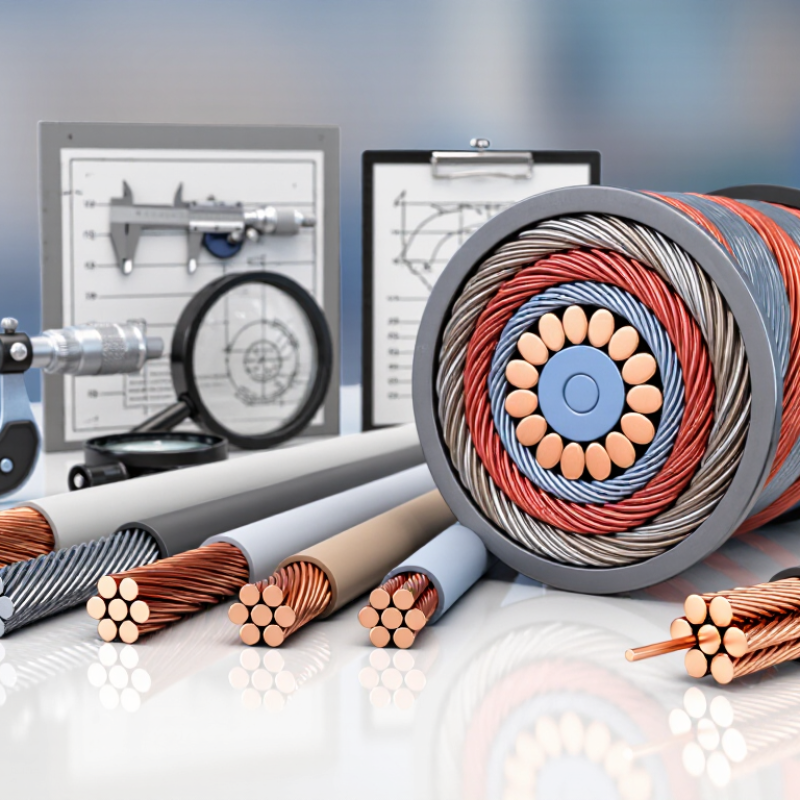
2026 Best Braided Copper Cable Suppliers for Global Buyers

Braided Copper Cable Fundamentals: 100% IACS Conductivity at 20°C

At 20°C, 100% IACS represents the conductivity reference for standard annealed copper: approximately 58 MS/m. It is a material benchmark, not a guarantee that every finished braided cable performs identically. Temperature matters. As copper warms, its electrical resistance rises, so test conditions should be stated clearly.

A braid’s construction also affects its measured resistance. Fine strands bend easily around a tight corner, while strand count, braid angle, cable length, and contact quality influence electrical performance. A cable may look thick on a product sheet yet have less effective copper area than expected. Appearance alone is not enough.

For supplier comparisons, ask for the copper conductivity result, test temperature, and method, alongside the cable’s dimensions and strand details. A four-wire resistance measurement can reduce errors from test-lead and connection resistance. Check how the sample was terminated, too; a poor clamp can distort readings. One specification gap is easy to miss: 100% IACS describes conductivity relative to a reference, not the finished assembly’s exact resistance. That distinction is small on paper. In a long installation, it can matter. Requesting traceable test records helps buyers compare like with like.

Braided Copper Cable Fundamentals: IACS Conductivity at 20°C

The IACS reference conductivity for copper is 100% at 20°C, equivalent to approximately 58 MS/m. The chart shows conductivity values calculated from that reference; these are benchmarks, not measurements of specific cable products. Actual braided cable performance depends on the conductor material, braid construction, and connections.

Conductor Classes: IEC 60228 Class 2, 5, and 6 Requirements

When comparing braided copper cable suppliers, verify the conductor class separately from the braid. IEC 60228 classifies the cable’s conductor, not its braided copper screen. Class 2 uses stranded conductors for fixed installations. Class 5 uses finer strands for flexible cables, while Class 6 uses even finer strands for greater flexibility. The distinction matters when a cable must bend repeatedly or fit a tight routing path. The braid may look substantial, but it does not confirm the conductor’s class.

Ask suppliers for the declared conductor class, nominal cross-sectional area, strand construction, and maximum DC resistance at 20°C. These details help buyers compare products on a consistent basis.

Resistance is a practical check: higher values can mean greater voltage drop and heat under load. Check the test basis, too.

The braid is different. Its coverage and wire size affect screening and mechanical protection, not IEC 60228 conductor compliance. For a flexible assembly, request construction details and bend-test evidence relevant to the intended use. A data sheet can still leave gaps, so clarify whether the quoted class applies to the conductor inside the finished cable. Small detail, real consequence.

Braid Performance Metrics: Coverage, Wire Diameter, and Transfer Impedance

For global buyers comparing braided copper cable suppliers in 2026, three metrics deserve close attention: coverage, wire diameter, and transfer impedance. Coverage describes how much of the cable surface the braid shields. A higher percentage can reduce openings, but it does not guarantee better performance by itself. Braid angle, strand count, and cable flexibility also matter. Ask suppliers how coverage is measured and request construction details, not just a single percentage.

Wire diameter affects both braid density and handling. Fine wires can form a flexible, closely woven shield, while heavier wires may offer durability in demanding installations. The trade-off is real. Check whether the stated diameter refers to each strand or the finished braid, and compare samples under the same bend conditions. Transfer impedance, often reported in milliohms per metre, helps describe how effectively a shield limits interference along its length. Always check the test frequency and method; values from different setups may not be directly comparable.

Tips: Request a test report, braid coverage method, and strand-diameter tolerance. Inspect a cut cable end under bright light for uneven gaps. Small gaps matter. One imperfect comparison can still be useful, but coverage alone is an incomplete way to rank suppliers. Tie each figure to your actual frequency range, installation space, and handling needs.

Supplier Quality Checks: ISO 9001, RoHS/REACH, and Traceable Test Data

For global buyers, a braided copper cable supplier should provide more than a polished specification sheet. Ask for an ISO 9001 certificate, then check its scope, issuing body, and expiry date. A valid certificate supports confidence in quality processes; it does not guarantee every cable lot is defect-free. That distinction matters.

Check RoHS and REACH documentation against the exact cable construction, including insulation, plating, and any coatings. Request dated declarations and clarify which materials or product versions they cover. Do not assume a generic statement applies to every configuration. Paperwork can look tidy while a sample tells another story.

Traceable test data makes supplier checks more practical. Each report should identify the production lot and test date, with methods and results for relevant properties such as conductor resistance, braid coverage, and dimensions. Ask whether measurements come from routine production checks or a one-time sample. Keep the report with the purchase record, then compare it with incoming cables. Small differences may be acceptable, but unexplained ones deserve a question. Some records are incomplete; that is a reason to pause, not to guess.

2026 Best Braided Copper Cable Suppliers for Global Buyers - Supplier Quality Checks: ISO 9001, RoHS/REACH, and Traceable Test Data

Supplier qualification checklist for braided copper cable purchases. Acceptance limits for product properties should be agreed in the buyer’s drawing or purchase specification; this table does not represent performance claims for any specific supplier.

Quality Check Evidence to Request Verification / Acceptance Rule Record to Keep When to Check
Quality management system Valid ISO 9001 certificate and stated certification scope Confirm certificate validity, issuing certification body, site, and scope using the issuer’s verification service or accreditation records. The scope should cover relevant manufacturing or quality activities. Certificate copy, verification date, covered site, and scope Initial approval and before certificate expiry
RoHS substance compliance Product-level declaration and, where required, test reports for the supplied cable construction Check against Directive 2011/65/EU and applicable amendments, including the restricted-substance limits and exemptions relevant to the product. Confirm that the declaration covers all applicable cable materials and components. Signed declaration, product or part reference, report number, and revision date Initial approval and after material or regulatory changes
REACH / SVHC status REACH declaration identifying the Candidate List version or review date Check the current ECHA Candidate List at the time of review. Where an article contains a Candidate List substance above 0.1% weight by weight, confirm applicable communication obligations under REACH Article 33. Declaration, reviewed-list date, affected material details, and any required communication At approval and whenever the Candidate List or material composition changes
Copper material identity and lot traceability Mill certificate or material certificate, incoming inspection record, and production-lot identification Confirm the documented copper grade and material condition meet the purchase specification. Each finished cable lot should be traceable to its raw-material batch and production records. Material certificate, raw-material batch ID, finished-lot ID, and manufacturing date Each shipment or production lot
Braid construction and dimensions Inspection report for braid width or diameter, thickness, strand count, and construction, as applicable Compare measurements and construction details with the approved drawing or purchase specification. Use calibrated measuring equipment and record the sampling plan and actual results. Lot-specific dimensional report, instrument ID, calibration status, and sample results First article and agreed production-lot sampling
Electrical resistance / continuity Test report stating sample length, test temperature, method, measured result, and instrument details Compare results with the agreed product specification. Ensure the test setup and temperature basis are stated; do not compare measurements taken under materially different conditions without an agreed correction method. Dated report linked to the finished-lot ID, with raw readings and equipment identification Qualification and agreed lot testing
Mechanical and visual inspection Inspection results for braid integrity, broken or loose strands, surface condition, and specified flexibility or tensile properties Apply the agreed inspection method and product-specific limits. Document any defects against defined acceptance criteria rather than relying on an undocumented visual judgment. Inspection checklist, test method, acceptance criteria, and nonconformance record if applicable Incoming qualification and routine production inspection
Test-data traceability and calibration Sample identification, test date, method, equipment ID, calibration status, operator or reviewer, and approval Verify that test results can be linked to the shipment lot and that measuring equipment is within its calibration interval. Resolve missing, altered, or inconsistent records before acceptance. Original or controlled test report and linked calibration record Every certificate-of-analysis or test-report review
Change control and nonconformance handling Written change-notification process and corrective-action procedure Require prior notification and buyer approval for changes that may affect material, construction, manufacturing site, test method, or compliance status. Document containment and corrective action for rejected lots. Approved change notices, deviation approvals, and corrective-action records At onboarding and whenever a change or defect occurs

Global Supplier Comparison: MOQ, Lead Time, Production Capacity, and Cost per kg

For global buyers, compare braided copper cable suppliers by specification, not headline price alone. MOQ may be quoted by kilograms, reels, or production runs, so confirm the unit before comparing offers. A custom braid with fine strands or tight coverage may require a higher minimum than a standard configuration. Small samples help.

Lead time should separate sample approval, material preparation, and mass production. Ask whether the quoted schedule includes braiding, inspection, and export packing. A supplier may promise a short dispatch window but have limited machine time during peak orders. Get the production slot in writing. Then check how delays are handled.

Capacity figures need context: request monthly output for your cable diameter and braid pattern, plus the number of available lines. Cost per kilogram is useful, but it can hide differences in copper purity, strand count, braid coverage, tolerances, and packaging. Compare delivered specifications and payment terms alongside the quote. A spreadsheet makes gaps visible. Still, it may oversimplify real production. Use recent batch records, inspection reports, and a pilot order to test consistency before scaling. Quotes should state validity dates, because copper prices and freight can change between inquiry and purchase.

FAQS

What does IEC 60228 conductor class describe?

It describes the cable conductor, not the braided copper screen. Check the declared class separately.

How do Class 2, Class 5, and Class 6 differ?

Class 2 uses stranded conductors for fixed installations. Class 5 has finer strands for flexibility. Class 6 uses even finer strands.

What details should buyers request from suppliers?

Ask for conductor class, nominal cross-sectional area, strand construction, and maximum DC resistance at 20°C. Confirm the class applies to the finished cable.

Why check maximum DC resistance?

Higher resistance can mean greater voltage drop and heat under load. Compare values using the same test basis.

Does higher braid coverage always mean better shielding?

No. Braid angle, strand count, and cable flexibility also matter. Ask how coverage was measured.

How can braid wire diameter affect a cable?

Fine wires can create a flexible, closely woven shield. Heavier wires may suit demanding installations. The trade-off is real.

What should buyers know about transfer impedance figures?

Check the test frequency and method. Results from different setups may not be directly comparable.

How can a braid be inspected?

Inspect a cut cable end under bright light for uneven gaps. Small gaps matter. Coverage alone is an incomplete comparison.

What evidence is useful for flexible cable assemblies?

Request construction details and bend-test evidence for the intended use. A data sheet may still leave gaps.

Conclusion

This guide to Braided Copper Cable helps global buyers compare products and suppliers using practical, measurable criteria. It explains the significance of copper’s reference conductivity of 100% IACS at 20°C and outlines how IEC 60228 conductor classes 2, 5, and 6 relate to conductor construction and flexibility. For braid performance, buyers should assess coverage, individual wire diameter, and transfer impedance together, since these characteristics influence shielding effectiveness, flexibility, and suitability for a particular application.

Supplier evaluation should include documented quality processes, relevant ISO 9001 certification, RoHS and REACH declarations, and traceable test data for supplied products. The comparison also considers minimum order quantity, lead time, production capacity, and cost per kilogram, helping buyers balance technical requirements with purchasing needs. A consistent evaluation checklist makes it easier to compare quotations fairly, identify gaps in product documentation, and select a dependable source for the intended project.


Charlotte

Charlotte

Charlotte is a seasoned marketing professional with a deep understanding of the company's portfolio and a passion for elevating its presence in the market. With a keen eye for detail and a commitment to excellence, she ensures that our professional blog is regularly updated with insightful articles......