Global buyers are entering 2026 with copper supply under closer scrutiny. The USGS Mineral Commodity Summaries 2025 reported approximately 22 million metric tons of mined copper production in 2024. That figure shows scale, but not the full purchasing risk. Refining capacity, energy costs, regional logistics, and certification can change the final cost of each conductor.
Stranded Copper Wire remains essential for applications requiring flexibility, vibration resistance, or repeated movement. Common choices include bare copper, tinned copper, concentric-stranded wire, bunched wire, rope-lay constructions, and high-flexibility Class 5 or Class 6 conductors. Each type behaves differently under bending, heat, corrosion, and termination pressure. A thicker cable is not automatically the better cable. It may be harder to install and more expensive to ship.
The International Energy Agency has identified copper as a critical material for grids, electric vehicles, and clean-energy equipment. S&P Global’s “Future of Copper” study projected demand could rise from about 42 million metric tons in 2025 to 53 million metric tons by 2035. The report also warned of a potential supply gap approaching 10 million metric tons. Forecasts can shift. They should be tested against current mill capacity and verified supplier data.
This guide examines the top types of Stranded Copper Wire for global buyers in 2026. It connects conductor design with IEC, ASTM, and application requirements. Buyers should confirm conductivity, strand diameter, insulation, temperature rating, and test documentation before ordering. Small details matter. Procurement decisions are rarely perfect. A practical comparison can still reduce costly surprises.
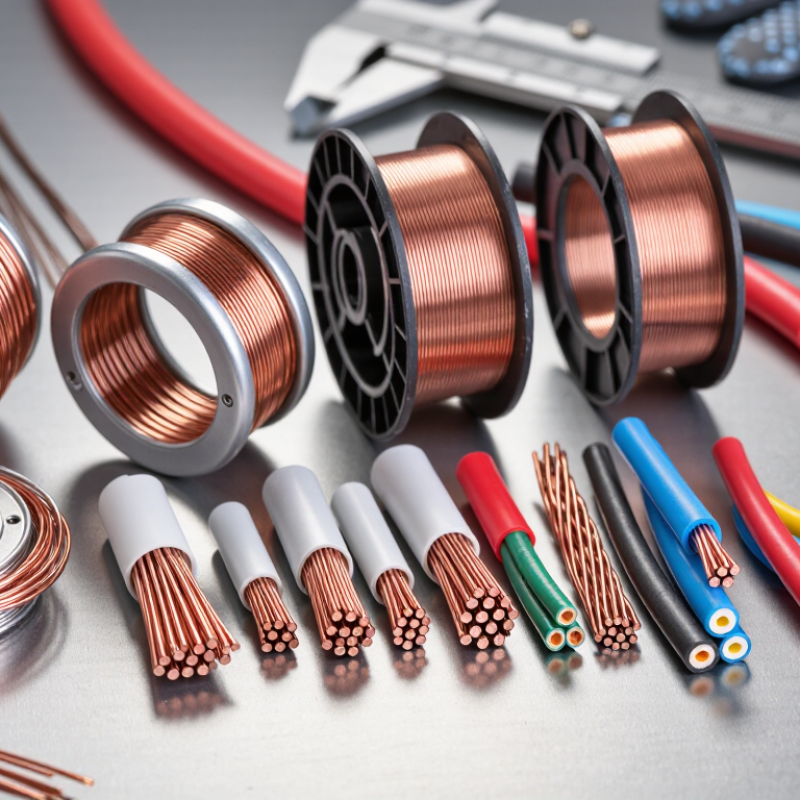
What Stranded Copper Wire Is and How It Differs from Solid Wire
2026 Top Types of Stranded Copper Wire for Global Buyers
Stranded copper wire consists of many thin copper strands twisted into one conductor. This construction gives the cable flexibility, especially where equipment moves, bends, or vibrates. A solid wire uses one continuous copper core. It holds its shape better but resists repeated bending.
The main stranded types include concentric, bunched, and rope-lay conductors. Concentric strands form orderly layers around a central wire. Bunched strands twist together more randomly and usually feel softer during installation. Rope-lay designs use groups of smaller bundles for demanding movement applications. Fine-stranded wire bends easily around tight terminals, while tinned copper can improve surface protection in humid environments.
Stranded copper often suits control panels, battery systems, flexible cords, and industrial machinery. Its larger surface area may also increase oxidation exposure if insulation or termination quality is poor. That detail is easy to overlook. Solid wire can provide simpler termination in fixed building circuits, where movement is limited. However, neither construction is automatically safer or more efficient. Current capacity depends on conductor size, insulation temperature, installation method, and applicable electrical standards.
In practical purchasing, I inspect strand count, copper purity, flexibility class, insulation markings, and test documentation. I also check whether the terminal accepts fine strands without damaged filaments. A tight bend can reveal weak construction quickly. My own preference is not universal: flexible wire can complicate termination, while solid wire can fail after repeated movement. The correct choice depends on the route, vibration, environment, and maintenance plan.
Core Types of Stranded Copper Wire by Construction
2026 Top Types of Stranded Copper Wire for Global Buyers
Core Types of Stranded Copper Wire by Construction
Stranded copper wire is built for movement, vibration, and easier installation. Its construction matters more than appearance. Concentric-stranded wire uses several layers around a central conductor. It offers consistent geometry and strong current-carrying performance. Bunched wire groups individual strands without fixed layering. It bends more easily, making it suitable for control panels and compact equipment. Rope-lay construction uses smaller stranded groups as larger strands. It supports repeated flexing in demanding industrial assemblies.
Compacted stranded wire presses the outer strands closer together. This reduces the conductor diameter and limits air gaps. The result can simplify terminal fitting and cable routing. Flexible Class 5 and Class 6 conductors use finer strands for frequent movement. IEC 60228 defines conductor classes and resistance requirements. Buyers should verify the stated class, strand diameter, temper, and resistance. The International Energy Agency reported that clean-energy copper demand may rise from about 6.3 million tonnes in 2023 to 10.9 million tonnes by 2035. (IEA, Global Critical Minerals Outlook 2024) More demand may increase specification pressure. Yet, higher demand does not make every construction suitable.
Tips: Match construction to movement first. Check the minimum bend radius, not only the cross-sectional area. Confirm copper purity, plating, insulation compatibility, and test reports. A common purchasing mistake is selecting fine-strand wire for a fixed installation. It bends beautifully, but may cost more without adding value. The boundary is not always clean. Ask for samples when flexibility claims seem vague.
Insulation, Conductor Grades, and Performance Options
2026 Top Types of Stranded Copper Wire for Global Buyers
Insulation, conductor grade, and flexibility now shape stranded copper wire selection. IEC 60228 classifies conductors by construction and flexibility. Class 2 suits fixed installations. Class 5 supports repeated bending. Class 6 offers even greater flexibility, but usually costs more. ASTM B8 also defines concentric-lay stranded copper conductors for power applications. These standards help buyers compare products across regions.
Insulation changes real-world performance. PVC remains practical for general wiring because it is economical and easy to process. XLPE handles higher temperatures and supports demanding power systems. ETFE provides stronger resistance to heat, chemicals, and abrasion, although its price can be difficult for large projects. The IEA Global Critical Minerals Outlook 2024 identifies copper supply as a possible constraint during clean-energy expansion. The USGS Mineral Commodity Summaries 2025 estimated global copper mine production at about 22 million metric tons in 2024. Supply planning matters.
Tips: Match the conductor class to movement frequency, not marketing language. Ask for resistance, elongation, temperature rating, and insulation thickness. Check the test method. A small detail, but often missed.
In field procurement, softer wire is not always better. Excessive flexibility may reduce mechanical strength. Larger stranded conductors can also create installation challenges inside tight terminals. I have seen specifications copied without checking actual bend radius. That shortcut can cause delays. Select the conductor grade, insulation, and strand geometry together. Performance is a system, not a single number.
How to Match Wire Types with Applications and Global Standards
Global buyers should match stranded copper wire to movement, temperature, and installation space. IEC 60228 class 2 conductors suit fixed power circuits, where moderate flexibility and reliable termination matter. Class 5 and class 6 conductors use finer strands for control cabinets, robotics, battery systems, and repeated bending. They are easier to route, but their larger surface area can increase termination sensitivity.
Start with the application, not the catalogue name. For a motor lead, choose insulation rated for heat, oil, and vibration, then verify the conductor class. ASTM B8 concentric-stranded conductors are common in power distribution, while ASTM B173 covers flexible rope-lay constructions for demanding movement. UL 758 may apply to appliance wiring, but acceptance still depends on the finished assembly and destination market. The International Energy Agency’s Global Critical Minerals Outlook 2024 places copper demand near 26 million tonnes in 2023 and projects continued growth through 2035. Supply pressure makes conductor efficiency and traceable sourcing more important.
Do not compare only diameter. Check resistance, strand count, lay length, current rating, voltage, and bend radius. IEC 60228 resistance values help compare metric conductors across suppliers. In practical inspections, a wire may meet resistance requirements yet fail because its insulation cracks near a terminal. That detail is easy to miss. A better specification lists the standard, conductor class, insulation material, temperature rating, testing method, and required certificates. Regional differences remain. A technically correct wire can still need retesting before installation.
Buyer Checklist for Sourcing Stranded Copper Wire in 2026
In 2026, buyers should match stranded copper wire to the real installation, not only the quoted price. Flexible Class 5 wire suits moving equipment and compact control panels. Class 2 wire may fit fixed installations with fewer bends. Fine strands improve flexibility, but they can cost more and may need careful termination.
A practical sourcing checklist starts with conductor details. Confirm copper purity, strand diameter, strand count, cross-sectional area, and resistance per kilometre. Ask for test reports linked to the exact production batch. Check insulation material, temperature rating, voltage rating, and color consistency. A 0.08 mm strand feels very different from a 0.20 mm strand during repeated bending. Do not accept “high flexibility” without a bend-test method.
Review compliance evidence against applicable standards, including IEC 60228 where relevant. Request samples on the same reel size used for mass production. Measure outer diameter, inspect surface finish, and test resistance after bending. Tinned copper can help in humid environments, but it is not automatically the best choice. Confirm packing, moisture protection, reel length, delivery tolerance, and traceability. I have seen attractive samples fail because the delivered insulation was thicker and less flexible. A checklist helps, but independent verification still matters. Leave room to question your own assumptions.
FAQS
Class 2 conductors suit fixed power circuits. They offer reliable termination and moderate flexibility. Less movement is expected.
Class 5 suits repeated bending in control cabinets, robotics, and battery systems. Class 6 offers even greater flexibility. It usually costs more.
No. Excessive flexibility can reduce mechanical strength. A softer wire may also need more careful terminal preparation. Better is not automatic.
PVC works well for economical general wiring. XLPE handles higher temperatures and demanding power systems. ETFE resists heat, chemicals, and abrasion more strongly.
Check resistance, strand count, lay length, current rating, voltage, and bend radius. Diameter alone can hide important differences.
Thin or damaged insulation may crack near a terminal. This can happen even when resistance meets requirements. Inspect that small area carefully.
Consider heat, oil, vibration, movement, and available installation space. Then verify the conductor class and temperature rating. The catalogue title is not enough.
Copper demand is growing with clean-energy expansion. Supply may become tighter. Buyers should request traceable sourcing and plan orders early.
Request the applicable standard, resistance results, temperature rating, insulation thickness, test method, and certificates. Regional acceptance may still require retesting.
Yes. It may be difficult to fit inside tight terminals. I have seen copied specifications ignore bend radius. That shortcut can delay installation.
Conclusion
Stranded Copper Wire is made from multiple small copper strands twisted together, giving it greater flexibility and resistance to repeated bending than solid wire. This article explains the main construction types, including concentric, compact, bunched, and flexible configurations, and shows how strand size, lay direction, and conductor class influence handling, conductivity, durability, and installation performance.
It also compares insulation choices, copper grades, temperature ratings, voltage capabilities, shielding options, and resistance to moisture, chemicals, and abrasion. Global buyers will learn how to match wire designs with applications such as control systems, power distribution, electronics, vehicles, and industrial equipment while considering commonly required international standards. The final sourcing checklist covers conductor size, insulation material, certification, testing documents, packaging, traceability, customization, lead time, and total purchasing cost, helping buyers select reliable Stranded Copper Wire for 2026 projects.

 Xingma