In the evolving landscape of electrical engineering, "Braided Copper Cable" stands out prominently. This versatile conductor is favored for its unique ability to reduce electrical resistance and enhance flexibility. Renowned industry expert Dr. Emily Carter states, "Braided Copper Cable revolutionizes connectivity in high-performance applications." Her insights shed light on the profound capabilities of this material.
As projects demand greater efficiency, the advantages of using braided construction become apparent. The interwoven strands allow for improved conductivity. This translates to lower energy losses during transmission. The durability of these cables makes them suitable for diverse settings, from industrial to residential environments. Yet, not every application may benefit equally from braided copper.
Choosing the right cable requires careful consideration of project specifications. The initial costs can be higher than standard options. It's essential to weigh the long-term benefits against immediate expenses. Embracing braided copper technology may not be the only solution, but its potential in enhancing performance is undeniable.
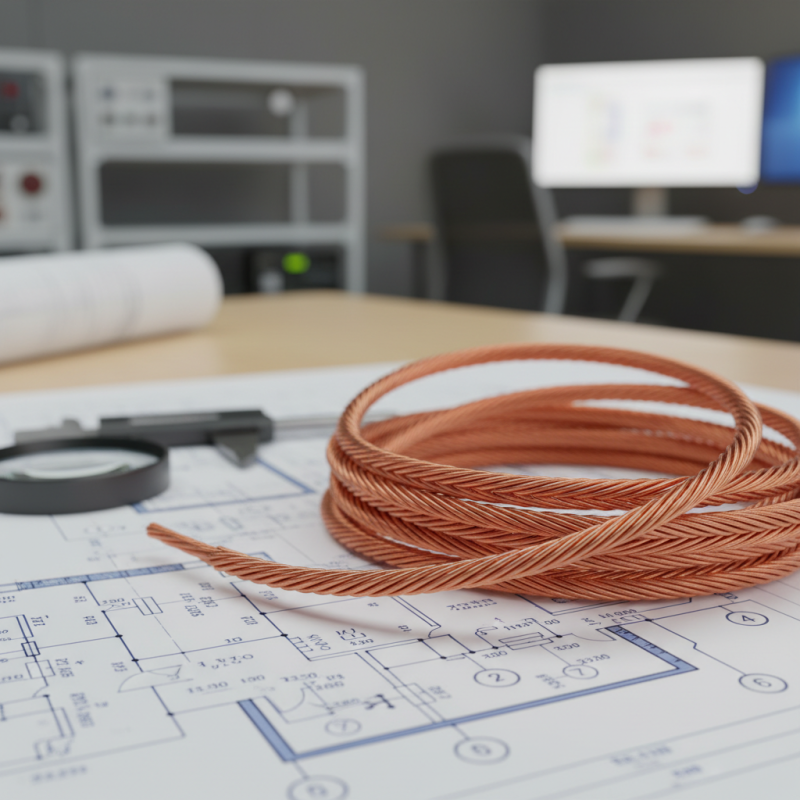
Braided copper cable stands out due to its unique composition. Made from multiple strands of copper wire, it offers flexibility and strength. This wire arrangement enhances conductivity, making it an excellent choice for various electrical applications. Its increased surface area allows for better current distribution, which can improve performance in high-demand scenarios.
The versatility of braided copper cable is noteworthy. It can withstand harsh environmental conditions while maintaining efficiency. This resilience enhances its reliability in critical systems. Some users report that the installation process poses challenges, requiring careful handling.
Braided cables also present a more complex structure compared to traditional solid cables. This complexity can lead to a steeper learning curve for installation. However, once mastered, users find the benefits outweigh these initial hurdles. Understanding the properties of braided copper cable is crucial for any project that demands superior conductivity and flexibility.
Braided copper cables have gained popularity for their numerous advantages in electrical projects. One of the most significant benefits is their flexibility. Unlike solid wires, braided cables can bend and twist easily. This characteristic is essential for installations in tight spaces. A study by the IEEE revealed that flexibility increases during temperature fluctuations, making braided copper cables ideal for varying environments.
Another advantage is enhanced conductivity. Braided cables typically offer improved electrical performance. According to a report by the Copper Development Association, braided copper installations can improve efficiency by up to 10% compared to traditional solid cables. This increased conductivity is particularly beneficial in power applications where energy loss is critical.
Lastly, braided cables tend to have better heat dissipation properties. With multiple strands woven together, they can distribute heat more uniformly. This reduces the risk of overheating in high-load applications. However, installers must pay attention to proper termination methods. Inadequate connections can lead to lower efficiency and potential failures. Adequate knowledge and skill are vital for maximizing the benefits of braided copper cables.
Braided copper cable is gaining traction across various sectors due to its unique properties. In aerospace, for instance, these cables are often used for grounding and shielding. Their flexible design allows for easy routing in complex installations. This adaptability can lead to improved space efficiency in tight environments.
In automotive applications, braided copper cables are essential for proper electrical connections. They can manage high-current loads while reducing electromagnetic interference. However, their installation may require careful handling to avoid damage during assembly. Maintaining these cables is crucial for longevity; neglect can lead to performance issues.
Industrial machinery also benefits from braided copper wiring. It enhances conductivity and flexibility while minimizing wear. Yet, with increased use, there is a need for awareness regarding thermal insulation. Proper insulation prevents overheating, which is critical for safety. As industries evolve, the role of braided copper cables will likely expand, but the risks must also be recognized and addressed.
Braided copper cable offers distinct advantages over traditional copper wire. Its unique structure allows for
enhanced flexibility and durability. This means it can withstand bending and twisting better than standard wires.
Projects that require complex routing benefit significantly from this adaptability. The increased surface area of braided cables also promotes efficient conductivity. Consequently,
they can handle higher currents with less heat generation.
However, braided cables may not be the best option for all applications. They can be more expensive than traditional copper wire.
This cost factor must be considered in budget-sensitive projects. Additionally, while they provide excellent connectivity, installation can be trickier. Proper techniques are
crucial to avoid issues like fraying or wear over time. Evaluating these trade-offs is essential to making an informed choice between braided and traditional copper options.
When installing braided copper cable, attention to detail is crucial for optimal performance. According to the Electrical Engineering Journal, properly preparing cable ends can reduce resistance by over 25%. Ensure that the cable is cut cleanly to prevent fraying. Always use appropriate tools for stripping insulation, avoiding damage to the wire strands. Use proper connectors to ensure a reliable and secure connection.
Regular maintenance is essential for longevity. Industry experts recommend inspecting connections every six months. Look for signs of corrosion, which can significantly affect performance. Use a multimeter to check continuity and resistance. This can help catch potential issues early on, preventing costly downtime or project delays.
Ambient conditions also play a role. High humidity or extreme temperatures can affect cable integrity. Ensure that installation locations avoid moisture and extreme heat sources. The National Electrical Code advises maintaining clearances around braided cables to prevent interference from other electrical components. Being mindful of these factors can lead to more reliable and efficient projects.
: Braided copper cables offer enhanced flexibility and durability, allowing them to withstand bending and twisting better.
The increased surface area of braided cables promotes efficient conductivity, enabling them to handle higher currents with less heat.
No, they may not be ideal for every application due to higher costs and more complex installation processes.
Proper techniques are crucial to avoid issues like fraying. Clean cuts help prevent wire damage.
Experts recommend inspecting connections every six months for signs of corrosion or wear.
Always use appropriate tools for stripping insulation to avoid damaging the wire strands during installation.
High humidity or extreme temperatures can compromise cable integrity, so avoid installing in such environments.
Regular inspections can catch potential issues early, preventing downtime or project delays from performance drops.
They can be more expensive than traditional copper wire, which may not suit budget-sensitive projects.
Proper connectors ensure reliable and secure connections, crucial for optimal performance of braided copper cables.
Braided Copper Cable offers numerous advantages that make it an ideal choice for various electrical projects. Composed of multiple strands of copper, this type of cable enhances flexibility and durability, allowing for better performance in demanding environments. One of the key benefits is its ability to reduce resistance and improve conductivity, making it superior to traditional copper wire. This reliability is crucial in industries ranging from telecommunications to aerospace, where high-performance cable solutions are essential.
When comparing Braided Copper Cable to conventional options, its advantages in heat dissipation and reduced electromagnetic interference become evident. However, to maximize its potential, understanding best practices for installation and maintenance is crucial. Proper handling and installation ensure long-lasting functionality, making Braided Copper Cable a valuable asset in any electrical setup. Overall, this innovative cabling option paves the way for safer and more efficient electrical systems across various applications.

Xingma