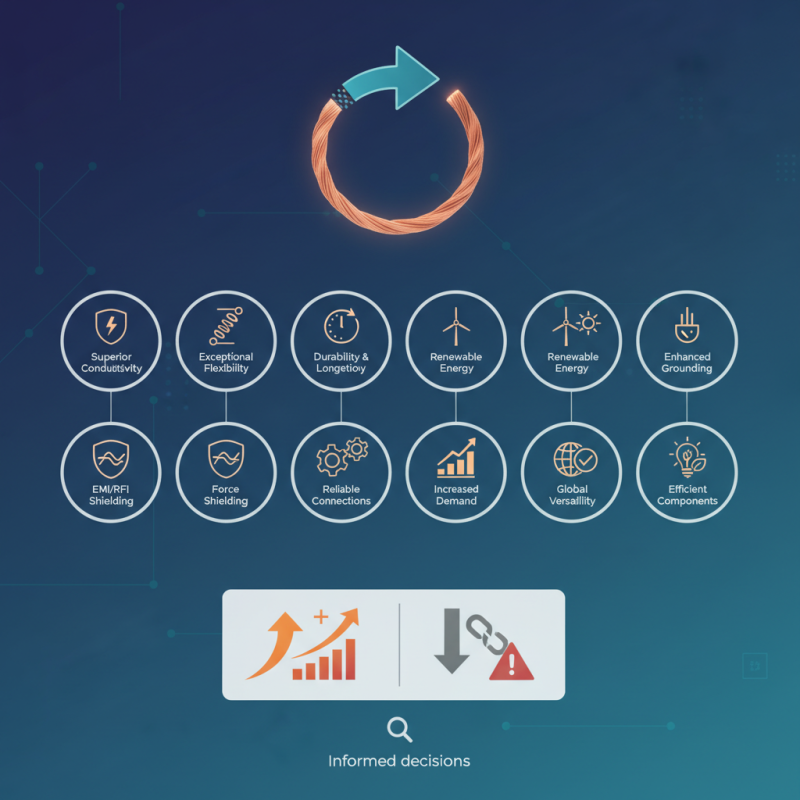
Copper Braided Wire is increasingly recognized for its unique advantages in various industries. According to a report from the Copper Development Association, the demand for copper wires has grown by over 10% annually in recent years. This rise reflects a broader shift towards more efficient electrical components and materials. Industry expert Dr. John Smith noted, “Copper Braided Wire is essential for reliable electrical connections and superior conductivity.”
The versatility of Copper Braided Wire makes it a preferred choice for global buyers. It offers exceptional flexibility and durability, which contributes to longer-lasting applications. For instance, its use in renewable energy technologies has skyrocketed due to the need for efficient power distribution. Copper Braided Wire also enhances grounding and shielding in electrical systems, which is crucial for device safety.
However, there are challenges that buyers must consider. Sourcing high-quality Copper Braided Wire can be inconsistent. Variations in manufacturing standards may lead to performance discrepancies. While it benefits many applications, not all Copper Braided Wire is created equal. Understanding these complexities is vital for informed purchasing decisions. As industry trends evolve, staying updated is key to leveraging the benefits of this remarkable material.
Understanding the Composition and Properties of Copper Braided Wire
Copper braided wire is a versatile material appreciated in various industries. Its composition primarily includes high-purity copper filaments. These strands are woven together, offering superior conductivity and flexibility. According to a recent industry report, copper's electrical conductivity is around 59.6 × 10⁶ S/m, making it ideal for applications that require excellent conductivity.
The properties of copper braided wire provide significant advantages. Its flexibility allows for easy installation in tight spaces. This feature is especially beneficial in electrical systems where bending is needed. Furthermore, copper's resistance to oxidation contributes to its longevity in various environments. An analysis of market trends shows a rising demand for materials that can withstand harsh conditions. Companies recognize the need for reliable components designed for durability.
Despite its many advantages, copper braided wire can have downsides. The material can be expensive compared to alternatives. Additionally, the risk of corrosion in certain environments must be considered. Buyers must evaluate the long-term costs and benefits. Understanding both the strengths and limitations of copper braided wire can lead to more informed purchasing decisions.
Top 10 Benefits of Copper Braided Wire
This chart illustrates the top 10 benefits of copper braided wire, rated on a scale of 1 to 10 based on their importance and performance. Copper braided wire is particularly valued for its high electrical and thermal conductivity, as well as its strength and flexibility, making it a preferred choice in various applications.
Key Advantages of Using Copper Braided Wire in Electrical Applications
Copper braided wire is increasingly favored in electrical applications due to its numerous advantages. These wires provide excellent electrical conductivity, which is crucial for efficient energy transfer. The high conductivity ensures minimal energy loss, making them ideal for power transmission. Furthermore, their flexibility allows for easy installation in various setups. This adaptability is especially useful in tight spaces where movement is essential.
Another significant benefit of copper braided wire is its durability. The braided design enhances resistance to fatigue and wear. This feature is vital for applications subjected to constant movement or vibration. Additionally, copper's natural resistance to corrosion adds longevity, ensuring that electrical connections remain reliable over time. However, one must consider the cost, as copper can be more expensive than alternatives. Balancing budget constraints with performance requirements is essential for buyers.
Beyond conductivity and flexibility, these wires also provide effective shielding against electromagnetic interference. This capability is critical in sensitive electronic applications. While the benefits are clear, it is important to regularly assess usage conditions. Ensuring that the wire's specifications align with application needs can help prevent issues down the line. Proper selection is key to maximizing the performance of copper braided wire in any electrical system.
Top 10 Benefits of Copper Braided Wire for Global Buyers
| Benefit |
Description |
| High Conductivity |
Copper braided wire offers excellent electrical conductivity, minimizing energy loss. |
| Flexibility |
The braiding allows for significant flexibility, making it suitable for a variety of applications. |
| High Durability |
Copper braided wire can withstand harsh environmental conditions, ensuring longevity. |
| Low Resistance |
The design of the braided wire results in lower electrical resistance, improving efficiency. |
| Versatility |
Ideal for a range of applications such as grounding, bonding, and connecting components. |
| Corrosion Resistance |
Copper has inherent resistance to corrosion when properly treated, enhancing performance. |
| Thermal Conductivity |
Excellent thermal conductivity aids in heat dissipation, protecting sensitive components. |
| Ease of Installation |
Flexible and lightweight design simplifies installation processes in various settings. |
| Cost-Effectiveness |
Durable and efficient properties lead to long-term savings on replacements and maintenance. |
Exploring the Flexibility and Durability of Copper Braided Wire
Copper braided wire stands out for its flexibility and durability, making it a favored choice for many applications. The wire's construction allows it to bend and flex without breaking, which is vital in settings where movement is constant. This quality ensures a reliable performance in electronic devices and various industrial applications.
Moreover, copper braided wire exhibits impressive resilience against wear and tear. Unlike rigid alternatives, it can withstand harsher conditions without losing conductivity. This durability translates to a longer lifespan, which is crucial for projects that require constant use. Users may find that initial costs can be higher, but the long-term benefits often outweigh these expenses.
However, it's essential to consider the maintenance aspects of copper braided wire. While it resists corrosion well, environmental factors may still affect its longevity. Regular inspections could prevent unexpected failures. In some cases, buyers might overlook this detail, leading to premature wear. Adapting to these realities can help ensure optimal performance and prevent inconveniences in the long run.
Cost Efficiency: Why Global Buyers Prefer Copper Over Alternative Materials
Copper braided wire has emerged as a top choice for global buyers, particularly due to its cost efficiency. Unlike alternatives, copper offers superior electrical conductivity. This trait makes it ideal for various applications, from manufacturing to electronics. The initial investment in copper may seem high, but its longevity reduces overall costs in the long run.
Another reason global buyers favor copper is its durability. Copper braided wire can withstand extreme conditions without losing integrity. In contrast, many alternative materials may degrade or fail under similar circumstances. This aspect is crucial in critical applications, where reliability is paramount. However, buyers should also be aware of fluctuating copper prices, which can impact budgeting.
Moreover, the aesthetic appeal of copper cannot be overlooked. Its natural luster adds a premium feel to products. Still, it's important to consider the potential for tarnishing over time. Regular maintenance can mitigate this issue, but it's an aspect that requires attention. Ultimately, balancing cost, reliability, and aesthetics is key for global buyers considering copper braided wire.
Environmental Impact and Sustainability of Copper Braided Wire Usage
Copper braided wire is increasingly recognized for its environmental benefits. Its recyclability is a significant advantage. Copper can be recycled multiple times without losing quality. This reduces the need for new raw materials. Hence, the demand for copper mining decreases, lowering its environmental footprint.
The production process of copper braided wire also impacts sustainability. The energy used in manufacturing is typically lower than that for many other materials. Additionally, copper has excellent conductivity, which means it can lead to energy savings in applications like electrical systems. However, the lifecycle impact should be closely monitored. While copper is beneficial, imperfect practices can arise during mining and processing.
Utilizing copper braided wire promotes a circular economy. The material can be repurposed and reused in various applications, minimizing waste. Buyers should prioritize suppliers committed to ethical practices. Awareness of the environmental implications of materials is crucial for responsible sourcing. Despite its benefits, continuous improvement is necessary to enhance the sustainability of copper use.
FAQS
: Copper braided wire is flexible and durable. It can bend without breaking, suited for constant movement.
It resists wear and tear well. It maintains conductivity despite challenges, leading to a longer lifespan.
Regular inspections are vital. Environmental factors can affect its longevity, causing premature wear if neglected.
Yes, it is recyclable. Recycling reduces the need for new materials, lowering the environmental footprint significantly.
Its production uses less energy compared to other materials. It’s suitable for energy-saving applications like electrical systems.
Yes, it’s important to prioritize suppliers with ethical practices. Awareness of environmental implications is essential.
Imperfect practices during mining and processing can impact sustainability. Continuous improvement is needed in these areas.
Initial costs may be higher. Yet, the long-term benefits often justify the expense due to durability.
Absolutely, it promotes a circular economy. Repurposing minimizes waste and enhances sustainability.
Monitoring the lifecycle is crucial. It helps identify and address potential environmental issues during production.
Conclusion
Copper Braided Wire is a highly versatile and efficient material that offers numerous benefits for global buyers, particularly in electrical applications. With its excellent conductivity, flexibility, and durability, Copper Braided Wire ensures reliable performance and longevity in various settings. The composition of this wire enhances its resistance to wear and tear, making it an ideal choice for demanding environments.
Moreover, the cost efficiency of Copper Braided Wire makes it a preferred option over alternative materials, as it often provides superior performance for a comparable investment. Additionally, the use of Copper Braided Wire aligns with sustainability goals, given its recyclability and lower environmental impact, further solidifying its status as an essential choice for businesses aiming to combine functionality with environmental responsibility.

 Xingma