When selecting the right Braided Copper Wire, it is essential to consider several factors. A strong wire can enhance both electrical performance and durability. Many users overlook this aspect, leading to potential failures in their projects. The right choice depends on the intended application.
Braided Copper Wire offers flexibility and conductivity. For instance, if you need it for audio applications, a finer braid may reduce resistance. Conversely, heavy-duty requirements might demand a thicker wire. Not all braided wires are created equally. Some might not meet the necessary quality standards, which can be a critical mistake.
It’s worth recognizing your specific needs before making a purchase. Conduct thorough research and consult expert opinions. Different scenarios call for different types of braided wires. Failing to address these factors may result in subpar performance or unexpected issues. Remember, the best choice not only enhances efficiency but also ensures reliability in the long run.
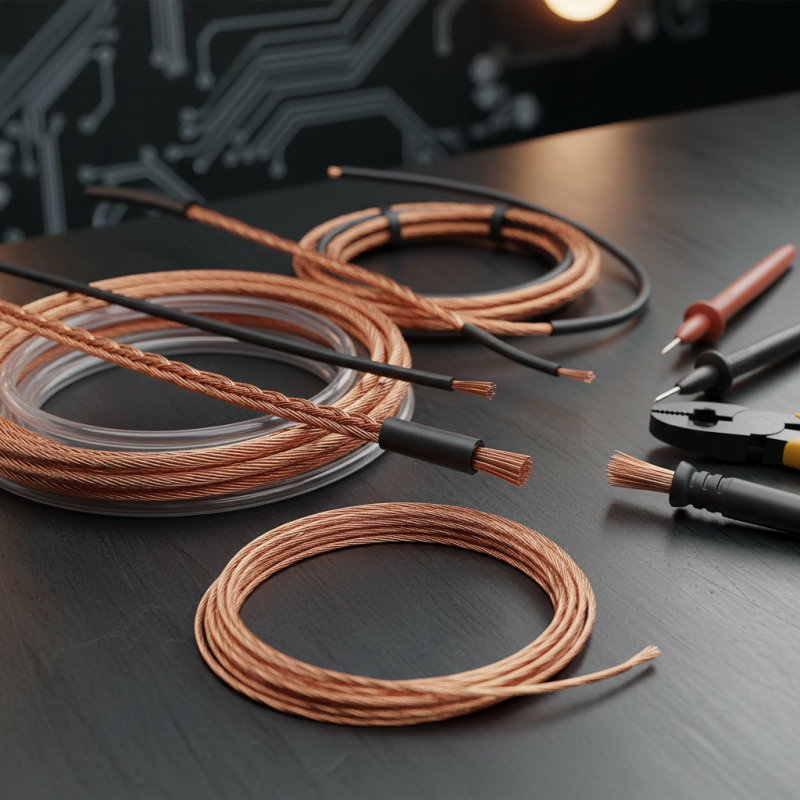
Understanding Braided Copper Wire and Its Applications
Braided copper wire is known for its excellent conductivity, flexibility, and durability. These wires are commonly used in various applications such as audio systems, automotive industries, and electrical connections. According to the International Wire and Cable Conference, braided copper wire has a conductivity rating of up to 100% IACS (International Annealed Copper Standard), making it an ideal choice for high-performance devices. Its unique structure allows for easy handling, which is why it’s favored by professionals in installation and manufacturing.
When selecting braided copper wire, consider the specific needs of your project. Factors like wire gauge, strand count, and insulation type significantly impact performance. For example, a higher strand count typically allows for better flexibility. A report from the International Electrotechnical Commission highlights that using the appropriate gauge can reduce energy loss by up to 15%.
Tips: Evaluate the environment where the wire will be used. This includes temperature range and exposure to chemicals. Also, ensure compatibility with other components in your system. Sometimes it’s easy to overlook these details, but they can affect performance significantly.
Key Factors to Consider When Choosing Braided Copper Wire
When choosing braided copper wire, consider your specific needs. The wire’s gauge is crucial. A thicker gauge can handle more current, while a thinner one is suitable for lighter tasks. Ensure the wire meets your electrical requirements. For high-performance applications, opt for low-resistance options.
Next, evaluate the wire's insulation type. Some applications require heat resistance, while others may need flexibility. The environment also matters. Indoor use may need different properties than outdoor applications. Pay attention to the wire's durability and tensile strength. A wire that frays easily will not serve you well.
Lastly, think about shielding options. If you are in a noisy environment, EMI shielding can enhance performance. This detail often gets overlooked. Reflect on your installation process too. Some wires are easier to work with than others. A wire that simplifies installation can save time and reduce frustration. Make an informed choice based on these factors for the best results.
How to Choose the Right Braided Copper Wire for Your Needs? - Key Factors to Consider When Choosing Braided Copper Wire
| Factor |
Description |
Recommended Use |
| Wire Gauge |
The thickness of the wire determines its current carrying capacity. |
Higher gauges for lightweight applications, lower gauges for heavy-duty uses. |
| Strand Count |
More strands mean greater flexibility and lower resistance. |
Use higher strand counts for applications requiring movement. |
| Insulation Type |
Different insulation types affect the durability and heat resistance. |
Choose based on environmental exposure; PVC for moisture, Teflon for high heat. |
| Length |
Length requirements based on application and installation needs. |
Select appropriate lengths to avoid excess waste or shortage. |
| Flexibility |
The wire's ability to bend without breaking. |
Use in applications needing tight bends and movement. |
Evaluating Wire Gauge and Strands for Your Specific Needs
Choosing the right braided copper wire depends greatly on wire gauge and the number of strands. Wire gauge, measured in American Wire Gauge (AWG), influences resistance and current capacity. For instance, a 10 AWG wire can carry more current than a 20 AWG wire. Data suggests that thicker wires result in less voltage drop over long distances. This is crucial for applications like electrical installations and audio systems.
The number of strands in a wire affects flexibility and performance. Wires with more strands bend easily and improve flexibility, while a single solid strand offers better conductivity for stable connections. A report from the Institute of Electrical and Electronics Engineers (IEEE) indicates that multi-stranded wires are preferred in dynamic environments. For static applications, solid wires may suffice but could be less reliable over time.
When selecting wire for your projects, assess your specific needs. Higher gauge wires might seem adequate but can lead to overheating and potential hazards. Evaluate the actual distance the current needs to travel. A mismatch here could lead to inefficiencies. Balancing your choice between gauge and strand count is key for optimal performance.
Identifying Quality and Durability in Braided Copper Wire
When selecting braided copper wire, understanding quality and durability is crucial. Braided copper wires are popular for their excellent conductivity and flexibility. Studies show that high-quality braided copper can improve electrical performance by up to 30%. This makes it essential to identify wires that meet specific standards.
Look for wires with greater strand counts. More strands often mean increased flexibility and better durability. A report from the Institute of Electrical and Electronics Engineers states that well-constructed braided wires are less prone to fatigue and breakage. Additionally, insulation quality matters. High-temperature ratings ensure longevity, even in challenging environments.
Inspect wire thickness and gauge as well. Thicker wires can handle larger currents, but they may sacrifice flexibility. Consider the balance required for your application. Conducting thorough research can lead to better choices. However, there can be misleading claims. Always verify the specifications before purchasing to ensure you receive a product that meets your needs.
Comparative Analysis of Braided Copper Wire Quality and Durability
Comparative Analysis of Brands and Pricing Options for Copper Wire
When choosing braided copper wire, brand and pricing can significantly impact your decision. Analyzing various brands helps highlight their strengths and weaknesses. Some brands excel in durability, while others might offer better conductivity. It's essential to research each brand's reputation and customer feedback to understand their reliability.
Pricing options vary widely in the market. Higher-priced copper wire may promise superior quality, yet that is not always the case. Sometimes, lesser-known brands offer competitive prices with comparable performance. It’s wise to compare several products, taking note of specifications like gauge, insulation type, and flexibility. This may help identify the best value for your specific needs.
While comparison is crucial, it’s also important to reflect on specific project requirements. What works for one application may not suit another. Some users find they prefer a certain flexibility or insulation type based on their experiences. It’s always beneficial to gather insights from various sources before making a decision. The process might feel overwhelming, but careful consideration leads to a more satisfying purchase.
Conclusion
When selecting the appropriate Braided Copper Wire for your projects, it's crucial to understand its unique characteristics and diverse applications. Key factors to consider include wire gauge, the number of strands, and the specific requirements of your application to ensure optimal performance and efficiency.
Evaluating the quality and durability of Braided Copper Wire is essential, as these elements directly influence its lifespan and reliability. A comparative analysis of various brands and pricing options can also provide insights, allowing you to make an informed decision while balancing cost and quality. By considering these factors, you can confidently choose the right Braided Copper Wire to meet your specific needs.

 Xingma