What is Copper Strip Welding and How is it Done?

Time:2026-05-25 Author:Charlotte
0%

Copper Strip Welding is a critical process in the electrical and electronics industries. It involves joining copper strips, which are integral components in various applications. According to a recent report by Technavio, the global demand for copper strip welding has grown by 4% annually over the last five years. This growth reflects the increasing need for efficient electrical connections and components.

Experts in the field, such as Dr. Jonathan Reed, emphasize the importance of precision in this process. Dr. Reed states, “The quality of a copper strip weld can dramatically affect electrical performance.” This underscores the necessity for skilled technicians and advanced technology in ensuring high-quality welds.

However, there are challenges. Variability in welding methods can lead to defects. It’s crucial to adopt reliable techniques and regularly refine processes. Continuous training for technicians is also essential. The future of Copper Strip Welding lies in innovation and expertise, ensuring it meets evolving industry standards and demands.
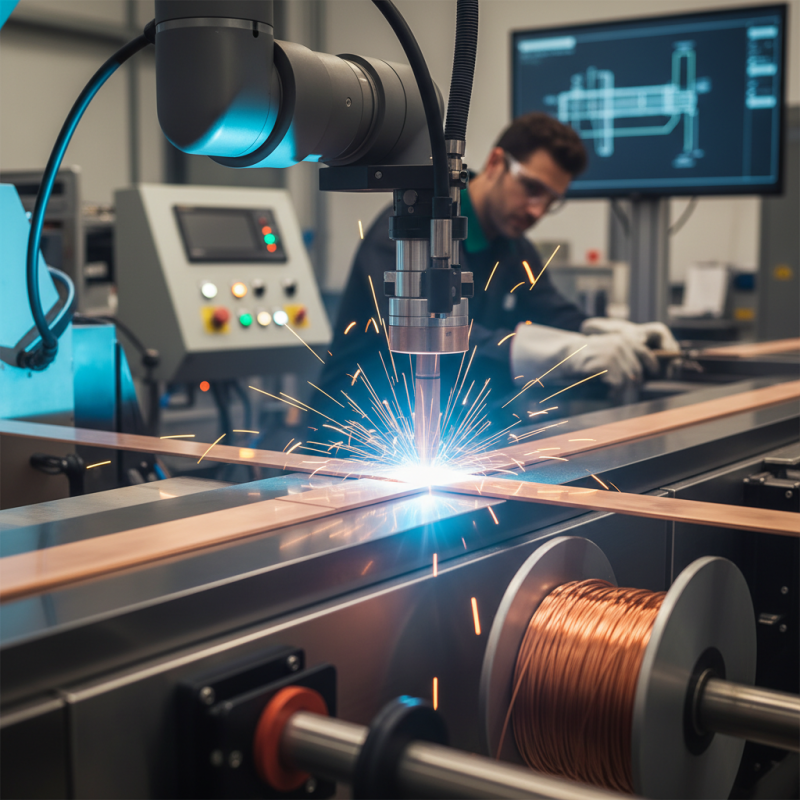
What is Copper Strip Welding and How is it Done?

What is Copper Strip Welding?

Copper strip welding is a specialized process used to join copper strips through heat and pressure. This technique is primarily applied in electrical connections and automotive parts. The process ensures a strong, conductive bond, making it essential in many industrial sectors.

During copper strip welding, the metal is heated, usually through resistance or arc welding methods. This creates a molten pool that allows the copper to fuse together. It's crucial to control the temperature carefully; too much heat can lead to defects. Understanding the properties of copper helps in achieving a successful weld.

Notably, the quality of the weld often depends on the skill of the operator. Even experienced welders face challenges during the process. Imperfections can arise, sometimes from improper alignment or excessive heat. Continuous learning and practice are key to improving outcomes in copper strip welding. This art requires patience and deep understanding of copper's behavior under different conditions.

What is Copper Strip Welding and How is it Done?

Process Description Applications Advantages
Resistance Welding Uses electric current to create heat for welding copper strips. Electrical connections, automotive components. Fast, efficient, and produces minimal thermal distortion.
TIG Welding Uses tungsten electrode to provide a high-quality weld. Electronics, decorative items. Allows for precise control and high-quality welds.
Laser Welding Utilizes a laser beam to melt and join copper strips. Precision engineering, high-speed production. High speed and precision with minimal heat-affected zone.
Ultrasonic Welding Applies high-frequency ultrasonic vibrations to create a bond. Battery connections, wire harnesses. No need for additional materials, quick process.

The Importance of Copper Strip Welding in Various Industries

Copper strip welding plays a crucial role in various industries, including electronics, automotive, and construction. Its ability to create strong, reliable connections makes it indispensable. In electronics, for example, copper strips are often used in circuit boards. Their efficient conductivity ensures optimal performance, making reliable welds essential.

In the automotive sector, copper strip welding is important for battery connections. As electric vehicles gain popularity, demand for quality welds increases. However, ensuring consistent quality can be challenging, especially with the varying thickness of copper strips. This reflects the need for precise control in welding techniques and equipment.

Construction also benefits from copper strip welding, particularly in electrical systems. The durability of copper ensures long-lasting connections in wiring. However, improper welding techniques can lead to failure points, highlighting the importance of skilled technicians. The challenge lies in balancing speed and quality during the welding process.

Importance of Copper Strip Welding in Various Industries

Tools and Equipment Needed for Copper Strip Welding

Copper strip welding requires specific tools and equipment to ensure proper execution. First, a high-quality welder is essential. This device supplies the necessary heat to fuse copper strips effectively. Look for options that provide adjustable voltage settings. It allows you to manipulate the heat based on strip thickness.

Moreover, safety gear is crucial. Welders should wear protective gloves, goggles, and face shields. These items shield the skin and eyes from bright arcs and sparks. Additionally, a flame-resistant apron can prevent burns, making the welding process safer.

In terms of cleaning, wire brushes and solvents are necessary for proper surface preparation. Copper needs a clean surface for optimal bonding. A clean surface leads to better results but cleaning can be time-consuming and sometimes overlooked. Investing in the right tools helps avoid mistakes. However, it’s easy to forget vital equipment, leading to frustration during projects. Remember, preparation and the right tools significantly enhance the quality of copper strip welding.

Step-by-Step Process of Copper Strip Welding

Copper strip welding is a specialized process used in various industries, including electronics and automotive manufacturing. This technique requires precise control over temperature and pressure. The goal is to create strong and durable joints between copper strips. A study by the International Institute of Welding revealed that proper parameters can reduce defects by up to 70%.

The step-by-step process begins with preparing the copper strips. Cleaning the surfaces is vital to remove oxides and contaminants. Next, alignment is crucial. Misaligned strips can lead to poor weld quality. After alignment, the welding parameters are set. This includes voltage, current, and travel speed. Data from the Welding Research Council highlights that optimized settings can improve the mechanical strength of the welds significantly.

After welding, inspection is essential. Visual checks and non-destructive testing methods ensure weld integrity. Many operations overlook this step, but it can prevent costly failures later. The complexity of welding copper strips can lead to mistakes. Continuous reflection on techniques and outcomes is important for improvement.

Common Challenges and Solutions in Copper Strip Welding

Copper strip welding involves joining copper strips through a fusion process. While it is a reliable method, several challenges can arise. High electrical conductivity often results in difficulties with heat management. Additionally, copper's thermal properties can lead to uneven heating, making precise control essential during welding.

Common challenges include warping and distortion of components during the process. If the heat is not uniformly applied, the welding joint can suffer from weak bonding. Research indicates that improper welding can reduce the strength of the joint by up to 30%. To mitigate these issues, using advanced cooling techniques can enhance stability. Employing pre-weld heating allows for a more uniform temperature profile, improving overall weld integrity.

Tips: Ensure meticulous surface preparation. Clean the copper strips using a suitable solvent to remove any contaminants. Adjust the welding speed according to the thickness of the strips to ensure optimal results.

Another challenge lies in achieving the correct welding parameters. Variations in electrode pressure and welding speed can lead to inconsistent results. Operators should regularly review their equipment calibration. Regular training for welders can further improve consistency and quality.

FAQS

: What industries use copper strip welding?

: Copper strip welding is used in electronics, automotive, and construction industries.

Why is copper strip welding important in electronics?

It creates strong connections on circuit boards, ensuring efficient conductivity and optimal performance.

How does copper strip welding benefit the automotive sector?

It is essential for battery connections, especially with the rise of electric vehicles.

What challenges do welders face with copper strips?

Challenges include varying thickness, heat management, and potential warping or distortion.

How can improper welding affect joint strength?

Poor welding may reduce joint strength by up to 30%, highlighting quality concerns.

What techniques improve the quality of copper strip welding?

Advanced cooling techniques and pre-weld heating promote a uniform temperature.

How important is surface preparation in welding?

Meticulous cleaning of copper strips is essential to remove contaminants before welding.

Why is consistent equipment calibration necessary?

Inconsistent results can occur from variations in electrode pressure and welding speed.

How can welder training impact welding quality?

Regular training helps improve consistency and quality in welds.

What is a key factor in balancing during the welding process?

Balancing speed and quality is crucial for creating reliable welds.

Conclusion

Copper Strip Welding is a specialized process used to join copper strips together, which is essential in various applications such as electrical components, automotive parts, and construction materials. This welding technique ensures strong and durable connections that can withstand high levels of stress and temperature. The importance of Copper Strip Welding spans multiple industries, highlighting its role in enhancing the reliability and efficiency of electrical systems.

To perform Copper Strip Welding, specific tools and equipment are required, including welding machines, clamps, and safety gear. The process typically involves a series of well-defined steps to ensure precise and effective welds. However, challenges such as overheating and material distortion can arise, but there are proven solutions to mitigate these issues. Overall, understanding Copper Strip Welding's intricacies can significantly improve operational efficiency in relevant sectors.


Charlotte

Charlotte

Charlotte is a seasoned marketing professional with a deep understanding of the company's portfolio and a passion for elevating its presence in the market. With a keen eye for detail and a commitment to excellence, she ensures that our professional blog is regularly updated with insightful articles......