Why Choose Copper Stranded Wire for Global Applications?

Time:2026-10-20 Author:Amelia
0%

Global infrastructure is becoming more connected, electrified, and demanding. This shift makes conductor selection a practical engineering decision, not a purchasing detail. Copper Stranded Wire remains widely considered for flexible power, control, automotive, renewable-energy, and industrial assemblies.

The International Energy Agency’s Global Critical Minerals Outlook 2024 reports that copper demand from clean-energy technologies could rise sharply by 2035. The report also identifies supply expansion as a significant challenge. That pressure makes efficient material use increasingly important. Copper offers high electrical conductivity, while stranded construction allows repeated bending and easier routing through compact equipment. Picture a control cabinet: a solid conductor may resist movement, but fine copper strands can follow a narrow, vibrating pathway more comfortably.

Field experience still matters. Strand count, insulation quality, crimp design, temperature rating, and installation radius affect real performance. A high-quality cable can fail when poorly terminated. That part is easy to overlook.

USGS Mineral Commodity Summaries 2024 recorded global mined copper production at approximately 22 million metric tons in 2023. This scale supports a mature supply chain, but it does not guarantee consistent quality between suppliers. Buyers should review conductor resistance, strand construction, traceability, and applicable IEC or UL test evidence. Standards do not replace engineering judgment.

Copper Stranded Wire is not automatically the best answer for every installation. Weight, corrosion exposure, cost, and mechanical stress still require evaluation. The honest conclusion is less dramatic: reliable results come from matching the wire to the environment. When verified data, experienced assembly practices, and application-specific testing align, copper stranded conductors offer a dependable foundation for global electrical systems.
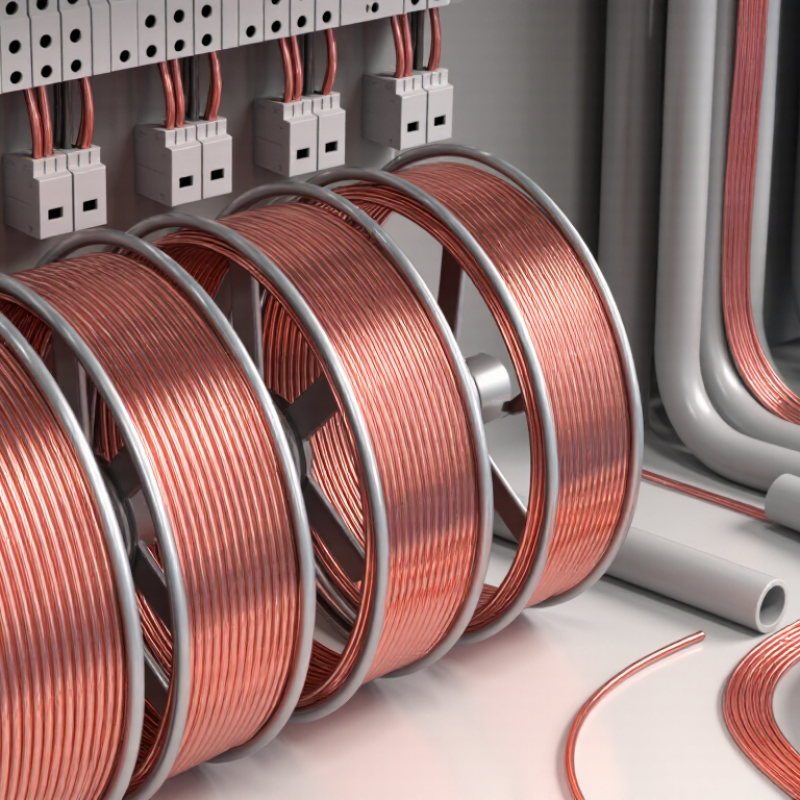
Why Choose Copper Stranded Wire for Global Applications?

Definition and Structure of Copper Stranded Wire

Copper stranded wire consists of many thin copper strands twisted into one flexible conductor. Unlike solid wire, it bends repeatedly without cracking easily. Each strand carries current, while the combined bundle provides a practical path for electrical flow. A protective insulation layer surrounds the conductor and separates it from moisture, heat, and nearby materials.

Its structure supports global applications in control panels, vehicles, renewable-energy equipment, and industrial machines. Installers often route it around tight corners or through vibrating assemblies. Stranded construction reduces mechanical stress at terminals and moving joints. However, flexibility does not mean unlimited durability. Poor crimping, excessive bending, or loose connections can increase resistance and create heat. Copper purity, strand diameter, insulation type, and temperature rating should match the operating environment. Regional electrical requirements also vary, so technical documents must be checked carefully.

Tips: Choose the strand class according to movement and installation space. Strip insulation without nicking the copper. Use a correctly sized terminal and apply steady crimping pressure. Keep exposed strands short. In humid or outdoor locations, inspect seals and corrosion protection regularly. A small mistake at the connection point can weaken an otherwise well-designed cable. It is easy to assume thicker wire is always safer. That assumption needs review. Length, current, temperature, voltage drop, and installation method all influence the final selection.

Key Electrical and Mechanical Properties

Copper stranded wire remains a practical choice for global electrical applications because its properties are predictable and well documented. Annealed copper can reach about 100% IACS conductivity, with resistivity near 0.01724 ohm·mm²/m at 20°C. This low resistance reduces voltage drop and limits heat during continuous operation. Actual performance still depends on conductor size, temperature, joint quality, and installation length.

Its mechanical behavior is equally valuable. Multiple fine strands bend repeatedly without the sharp cracking common in solid conductors. This helps inside control cabinets, mobile equipment, transport systems, and vibration-prone machinery. During field inspections, loose terminations often create more trouble than the wire itself. Proper crimping and torque matter. A lot.

Copper also offers useful tensile strength, stable contact performance, and good resistance to thermal cycling. However, it is not perfect. Bare copper can oxidize in damp or chemically aggressive environments, and repeated flexing can eventually break poorly supported strands. Insulation selection must match voltage, temperature, oil exposure, and ultraviolet conditions. Engineers should also check local installation rules, conductor class, bending radius, and allowable ampacity. These details vary across regions, and assuming one design fits every market can cause avoidable failures.

Advantages in Global Electrical Applications

Copper stranded wire supports reliable electrical work across many regions and industries. Its individual copper strands move together, giving the conductor useful flexibility. In field installations, this flexibility helps workers route cables through tight enclosures and curved conduits. Bends cleanly. That matters.

Copper also provides strong electrical conductivity, which can reduce voltage drop and heat during normal operation. Stable performance is valuable in building systems, industrial controls, transport equipment, and renewable energy installations. Global projects may face humid coastal air, dry interiors, freezing winters, or intense heat. Properly selected copper stranded wire can perform well across these changing conditions. Insulation still requires careful selection. Temperature, moisture, vibration, and exposure can change the result.

Experience shows that conductor quality alone does not guarantee a dependable connection. Poor stripping can damage strands, while loose terminals may create hot spots. Installers should use suitable lugs, ferrules, and approved tools. Engineers should verify ampacity, conductor size, insulation ratings, and bend limits against local codes and recognized international test methods. A practical weakness remains: copper costs more than some alternatives and adds weight. That trade-off deserves honest review. When flexibility, conductivity, and long service life matter, the added cost may be justified. Field records, inspection results, and routine testing provide stronger evidence than assumptions.

International Standards, Safety, and Compliance

Why Choose Copper Stranded Wire for Global Applications?

International compliance begins with the conductor, not the label. IEC 60228 classifies conductors by construction, resistance, and flexibility. Copper stranded wire can meet these requirements while bending safely inside crowded panels. Its lower electrical resistance also helps limit heat at terminals. Small details matter. A loose strand, poor crimp, or incorrect insulation rating can still create failure points.

The International Copper Study Group reported global refined copper usage at approximately 26 million tonnes in 2023. This demand reflects copper’s central role in power distribution, transport, and industrial equipment. However, copper content alone does not prove compliance. Engineers must verify conductor class, cross-sectional area, temperature rating, flame performance, and voltage suitability. IEC 60364 supports installation safety principles, while regional certification rules may add testing requirements. Requirements vary. That is easy to overlook.

Tips: Confirm the test standard before purchasing wire. Check the printed markings, not only the supplier’s product page. Measure terminal temperature during commissioning when practical. Use approved lugs and calibrated crimping tools. Field checks often reveal damaged strands near stripped ends. That weakness may not appear during a basic continuity test. A review is worthwhile, because even experienced teams can assume that one international approval covers every market. It does not.

Why Choose Copper Stranded Wire for Global Applications? - International Standards, Safety, and Compliance
Data Dimension Verified Data or Requirement International Relevance Safety and Compliance Considerations
Electrical Conductivity Annealed copper is commonly referenced at 100% International Annealed Copper Standard conductivity, equivalent to approximately 58 MS/m at 20°C. Its resistivity is approximately 0.017241 Ω·mm²/m at 20°C. High conductivity supports lower voltage drop and reduced resistive losses when the conductor cross-sectional area and installation conditions are properly selected. Resistance increases as conductor temperature rises. Design calculations should use the applicable operating temperature and installation method.
Stranding Classification IEC 60228 classifies conductors by construction and flexibility. Class 2 is stranded, while Classes 5 and 6 are progressively more flexible fine-wire constructions. The classification provides a common reference for conductor construction across many international cable specifications. More strands generally improve flexibility, but the finished cable still requires suitable insulation, bending-radius, termination, and mechanical tests.
Dimensional Compliance IEC 60228 specifies conductor resistance requirements and nominal cross-sectional areas for commonly used cable conductors. Using recognized cross-sectional sizes helps simplify specification, procurement, and verification across different markets. Conductor size alone does not determine allowable current. Installation method, ambient temperature, grouping, insulation rating, and permissible voltage drop must also be assessed.
Mechanical Flexibility Stranded construction bends more readily than a solid conductor of the same nominal cross-sectional area. This is useful for control panels, equipment wiring, machinery, transport systems, and installations requiring repeated or limited movement. The minimum bend radius and flexing frequency should follow the applicable cable construction standard and installation instructions.
Temperature Rating The permitted continuous conductor temperature is determined by the insulation system and the applicable cable standard; common insulation systems may be rated at 70°C, 90°C, or another specified value. Temperature ratings are not universally interchangeable. The rating must match the requirements of the destination market and equipment installation. Terminal and connector ratings must be equal to or greater than the conductor and insulation operating requirements. Heat accumulation can reduce service life and increase fire risk.
Flame and Fire Performance IEC 60332-1-2 provides a test method for vertical flame propagation on a single insulated wire or cable. Flame-performance requirements vary by product category, building application, and local installation code. Passing a single-cable flame test does not automatically establish low-smoke, halogen-free, fire-resistance, or circuit-integrity performance.
Electrical Safety Safe operation depends on correct conductor sizing, insulation voltage rating, overcurrent protection, secure termination, and protection against abrasion or moisture. These principles are applicable in low-voltage power, control, instrumentation, renewable-energy, and industrial applications worldwide. National wiring rules may impose additional requirements for separation, earthing, color identification, accessibility, and protection against electric shock.
Voltage Rating Voltage rating is assigned to the complete insulated cable or wire construction, not to copper alone. Different markets and cable standards use different voltage-designation systems, so the applicable regional standard must be identified before selection. Never infer voltage suitability from conductor size or copper conductivity. Check insulation thickness, dielectric tests, environmental rating, and marking requirements.
Environmental Compliance For products placed on applicable markets, material declarations may need to address restrictions on hazardous substances under legislation such as the European Union RoHS Directive 2011/65/EU and its amendments. Environmental documentation can support customs clearance, technical files, and customer compliance reviews. Compliance should be verified for the complete cable assembly, including insulation, jacket, fillers, screens, terminals, and any plating or additives.
Product Marking and Traceability Markings commonly identify conductor size, voltage rating, temperature rating, construction, applicable standard, and production traceability information where required. Consistent marking helps inspectors, installers, and distributors verify that the supplied product matches the project specification. Markings must be legible, durable, and consistent with the technical file, test reports, declaration of conformity, and shipping documentation.
Quality Verification Typical verification includes conductor resistance, dimensional checks, insulation thickness, high-voltage testing, tensile or elongation testing, and visual inspection. Test selection should follow the applicable product standard and the requirements of the importing or installing jurisdiction. Independent laboratory reports, batch records, calibration evidence, and certificates of conformity can strengthen project and regulatory acceptance.
Installation Compatibility Copper stranded wire is available in different flexibility classes and insulation constructions for fixed, protected, flexible, dry, damp, indoor, or outdoor applications. Correct application matching helps avoid failures caused by vibration, repeated bending, chemicals, ultraviolet exposure, moisture, or excessive temperature. The final selection must consider routing, enclosure conditions, electromagnetic compatibility, mechanical protection, and local electrical regulations.
Important: The values and standards shown are general technical references. The final conductor size, insulation type, current capacity, voltage rating, and conformity requirements must be confirmed against the applicable product standard, national installation rules, and project conditions.

Selection Factors for Different Operating Environments

Copper Stranded Wire for Global Applications

Selection Factors for Different Operating Environments

Selecting copper stranded wire starts with the environment, not the catalog number. Flexible strands suit moving panels, vibration, and tight bends. For fixed routes, conductor size and installation temperature matter more. Check the expected current, voltage drop, bend radius, and fault conditions before choosing insulation. Small details matter.

Heat changes the decision. In engine spaces or outdoor enclosures, insulation must tolerate sustained temperature, sunlight, moisture, and occasional chemical contact. In cold regions, a jacket that becomes stiff can crack during installation. Humid or coastal sites may need corrosion-resistant construction and sealed terminations. In crowded cabinets, flame behavior and low-smoke requirements may influence the insulation type. Local electrical codes still govern the final selection.

Mechanical stress deserves equal attention. Fine stranding improves flexibility, but excessive movement can fatigue poorly supported conductors. Use suitable lugs, correct crimping pressure, and strain relief at every transition. Field inspections often show failures beginning at terminations, not along the copper. That finding is easy to overlook. Verify the cable’s temperature rating after bundling, because heat may accumulate. A conservative choice is often wise, yet oversizing can increase cost and complicate connections. Recheck assumptions with actual site measurements.

FAQS

What is copper stranded wire?

It contains many thin copper strands twisted into one flexible conductor. Each strand carries electrical current. An insulation layer surrounds the bundle.

Why is stranded wire useful in tight installations?

It bends around corners and passes through narrow conduits more easily than solid wire. This helps inside crowded panels and moving equipment. It bends cleanly.

Does flexibility make the wire impossible to damage?

No. Excessive bending, poor stripping, and loose connections can damage strands. Repeated stress may increase resistance and produce heat. Flexibility has limits.

How should the correct wire size be selected?

Consider current, length, temperature, voltage drop, and installation method. A thicker conductor is not automatically safer. That assumption needs review.

What installation practices help maintain a reliable connection?

Strip insulation without cutting the copper strands. Use a correctly sized terminal and steady crimping pressure. Keep exposed strands short. Small details matter.

How does the surrounding environment affect wire selection?

Moisture, vibration, heat, cold, and sunlight can change performance. Outdoor and humid locations need suitable insulation and sealed connections. Inspect corrosion protection regularly.

What should engineers check for international applications?

They should verify conductor class, cross-sectional area, temperature rating, and voltage suitability. Installation requirements can differ between regions. One approval may not cover every market.

What checks can reveal connection problems?

Inspect stripped ends for damaged strands and measure terminal temperature when practical. Continuity testing alone may miss a weak crimp. Field inspection matters.

What are the main advantages and disadvantages of copper stranded wire?

It offers strong conductivity, flexibility, and useful service life. It can reduce routing stress in vibrating equipment. Copper may cost more and add weight. The trade-off deserves honest review.

Conclusion

Copper Stranded Wire is made from multiple thin copper conductors twisted or bundled together to form a flexible and reliable electrical path. Its structure combines copper’s excellent conductivity with improved resistance to bending, vibration, and repeated movement compared with solid wire. Key properties include low electrical resistance, efficient heat distribution, good tensile performance, and dependable connection quality when properly installed.

For global electrical applications, Copper Stranded Wire offers practical advantages in power distribution, control systems, equipment wiring, transportation, and renewable energy installations. Its suitability depends on conductor size, strand arrangement, insulation type, voltage and temperature ratings, flexibility requirements, and exposure to moisture, chemicals, or mechanical stress. International standards and safety requirements should be considered to support consistent performance, installation quality, and regulatory compliance across different regions. By evaluating the operating environment and selecting appropriate materials, insulation, termination methods, and protection, users can achieve a durable and efficient wiring solution for diverse applications.


Amelia

Amelia

Amelia is a seasoned marketing professional with a wealth of expertise in our company’s core offerings. With an unwavering passion for driving growth and innovation, she plays a pivotal role in shaping our marketing strategies and enhancing brand visibility. A key aspect of her responsibilities......