Explore our premium grade product selection engineered for absolute electrical integrity and severe environmental resilience.
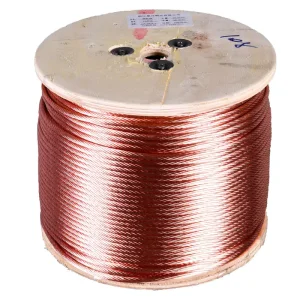
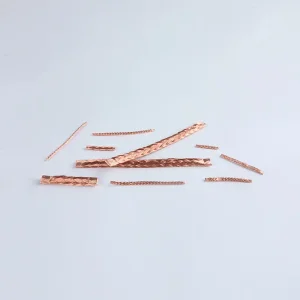
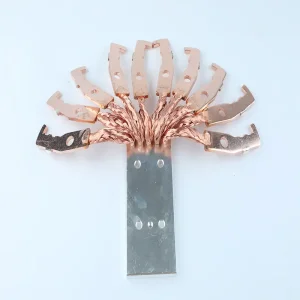
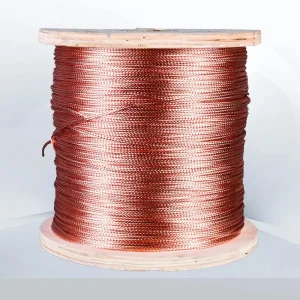
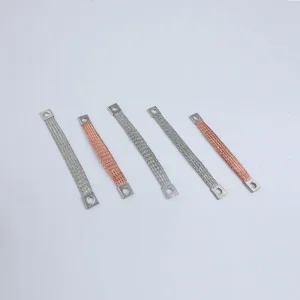
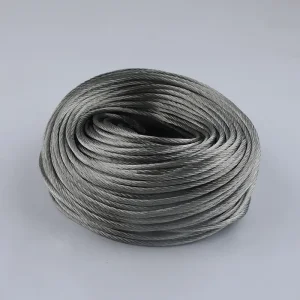
In modern electrical engineering, the choice of conductor substrate dictates the overall reliability, lifetime, and safety thresholds of complex systems. Raw copper possesses exceptional electrical conductivity, second only to silver. However, under high-humidity, high-temperature, or chemically aggressive environments, raw copper rapidly undergoes oxidation and galvanic corrosion. This chemical decay forms a non-conductive layer of copper oxide ($CuO$ or $Cu_2O$), causing an exponential spike in contact resistance, voltage drops, and localized thermal thermal runaway.
By electrochemically applying or hot-dipping a micro-thin layer of tin onto individual high-purity copper strands, our manufacturing process forms a robust metallurgical shield. The tin barrier remains stable up to high operating temperatures, resisting sulfurous components, salt sprays, and acidic humidity. Additionally, the tin layer facilitates outstanding solderability, which is vital for seamless, gas-tight connector assembly in high-vibration automotive harnesses and precision control circuitry.
From a physical perspective, utilizing a multi-strand geometry reduces the skin effect in AC power transmission applications. Since high-frequency current concentrates on the outer boundary of a conductor, partitioning a single large-gauge core into hundreds of micro-strands increases the total active surface area, optimizing high-frequency distribution and mitigating power losses.
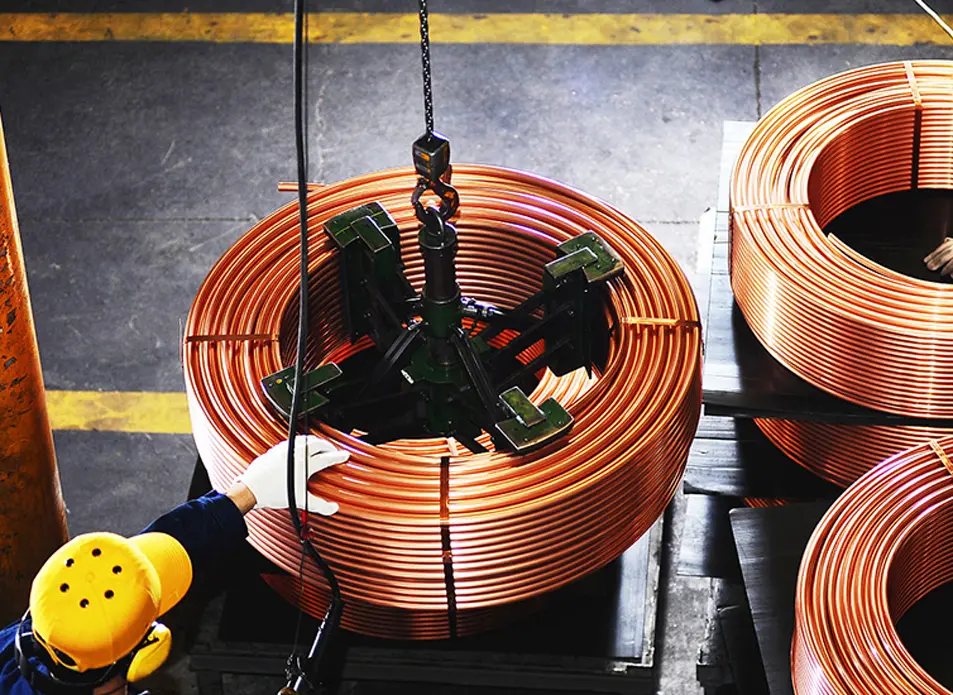
A breakdown of the chemical, mechanical, and geometrical parameters that make our tinned copper wires industry-leading solutions.
Utilizing premium T1/T2 grade red copper feedstock to guarantee high electrical conductivity. Our processes adhere to ISO standards ensuring nominal electrical resistivity of $\leq 0.01724 \ \Omega\cdot\text{mm}^2/\text{m}$ at 20°C, meeting 100% IACS (International Annealed Copper Standard).
Our uniform tin-plating layer meets ASTM B33 compliance, with coating thickness ranging from 1.0 to 5.0 micrometers depending on customization requests. This thickness prevents oxidation under continuous operating temperatures of up to 150°C.
Multi-strand layouts offer high mechanical ductility and structural compliance. Our products absorb mechanical shock, bending stresses, and constant structural vibration without work hardening or strand breakage.
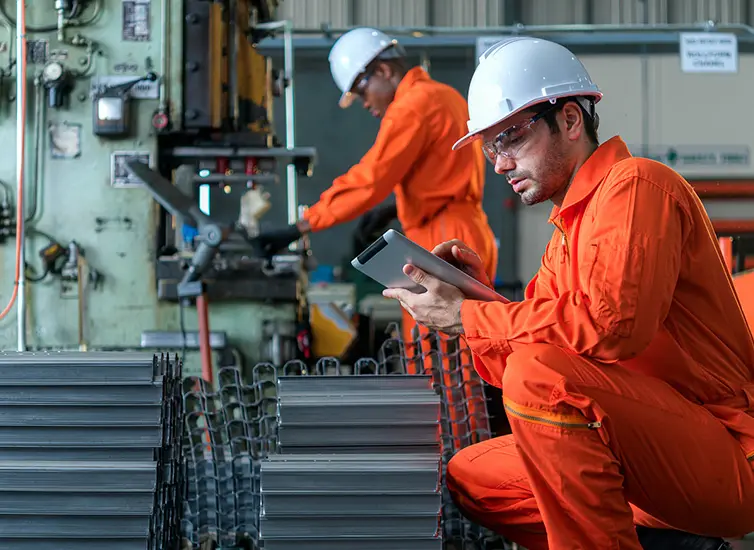
Established in 2019 and situated in Liushi, Wenzhou—historically celebrated as the capital of electrical appliances in China—Zhejiang Xingma Copper Industry Co., Ltd. has grown into a leading developer and supplier of electrical connection products. With a production facility spanning over 10,000 square meters of modern architectural footprint and employing over 100 dedicated technical and operations professionals, we specialize in high-precision wire processing, copper drawing, annealing, and stamping components.
Our manufacturing floor features more than 300 state-of-the-art machines, including high-speed Dingtian wire drawing machines, Fuchuan beam machines, specialized tube twisting machines, industrial braiding machines, temperature-controlled annealing furnaces, automatic cutting systems, welding machines, and heavy-duty 160-ton punching presses. Guided by automated manufacturing and high-throughput mechanical scaling, we achieve an annual output capacity exceeding 2,000 tons of high-conductivity metal solutions.
Providing high-integrity connection solutions across major global industries requiring mechanical resilience and high electrical throughput.
Modern Electric Vehicles (EV) and Hybrid Electric Vehicles (HEV) use high-amperage batteries that operate under extreme vibration. Our multi-strand tinned copper wires are the preferred material for battery pack interconnects, inverter lines, and charging plug assemblies. They provide flexibility and resistance to engine compartment heat.
In data centers and microwave transmission equipment, signal losses must be kept to a minimum. Tinned copper braided flat tapes function as effective grounding straps and coaxial cable shields, protecting high-speed communication systems from Electromagnetic Interference (EMI) and Radio Frequency Interference (RFI).
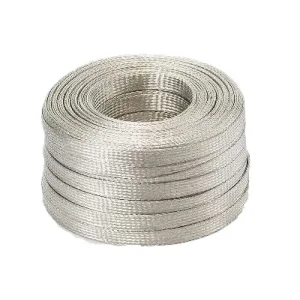
High-voltage substations, generators, and transformer terminals require heavy-duty flexible connections to accommodate thermal expansion. Our custom copper braided flat wire and rectangular braided configurations handle high currents while allowing for thermal contraction and expansion.
Photovoltaic installations and offshore wind farms are exposed to harsh elements like salt spray, UV radiation, and high humidity. Using non-tinned conductors leads to premature connection degradation. Our tinned copper stranded wire resists marine and outdoor elements, ensuring long-term performance and reducing plant maintenance costs.
How our geolocation in Liushi and processing capabilities translate to reliable deliveries and quality assurance for global markets.
Located in Liushi, Wenzhou, we are adjacent to major Chinese industrial hubs. Developed local shipping networks provide direct access to key international export ports, including Ningbo and Shanghai, facilitating prompt maritime and air shipping.
Our capabilities span from initial wire drawing, heat annealing, and precision tin-coating to multi-wire bunching, flat braiding, and custom stamping. Handling these processes in-house reduces intermediate steps and improves cost efficiency.
Equipped with microscope hardness testers, electrical conductivity meters, hydraulic tensile strength benches, and solderability testers, our quality control team tests raw materials and finished reels to ensure they meet ASTM, IEC, and DIN standards.
As high-voltage EV networks transition from 400V architectures to 800V and above, standard copper conductors face tougher performance requirements. Our R&D pipeline focuses on ultra-fine drawing techniques capable of mass-producing strands with diameters as small as 0.05 mm. This increases conductor flexibility and the overall surface area, optimizing the performance of high-frequency switching units.
In addition to mechanical updates, Zhejiang Xingma is working to reduce environmental impact. By recycling water from wire drawing cooling loops, reclaiming tin from plating solutions, and utilizing energy-efficient electrical annealing systems, we reduce energy consumption per ton of copper processed. This assists our global partners in meeting Scope 3 carbon reduction targets and aligning with international environmental regulations.
Ensuring every production batch matches your regional legal parameters and technical specifications.
Ensures that our soft or annealed tinned copper wires meet rigorous dimensional tolerances, tensile properties, and electrical resistivity standards required for industrial wire production.
We certify that our tin plating baths and copper substrates are free from lead, cadmium, mercury, hexavalent chromium, and restricted plasticizers, allowing import into EU and North American markets.
Batch tests assess structural fatigue resistance under load and fast wetting times during automated terminal soldering, ensuring performance in high-vibration applications.
Technical answers to common questions about selecting, processing, and sourcing tinned copper stranded wire.
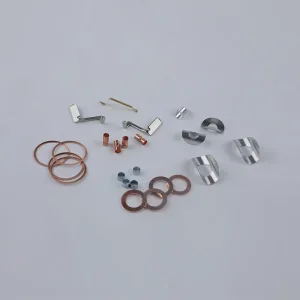
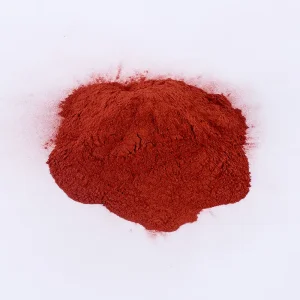
Explore our industrial range of high-purity copper powders, flexible braids, and stamping components.
 Xingma