Unlocking the science behind superior conductivity, durability, and physical flexibility in extreme environments.
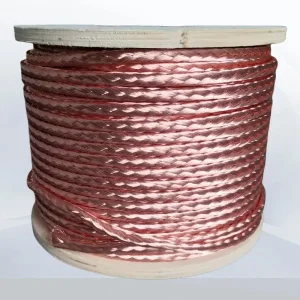
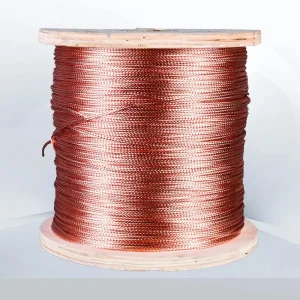
In high-power industrial installations, electrical design demands materials that offer an optimized balance of low resistance, high mechanical flexibility, and robust corrosion defense. Custom 6mm² tinned copper stranded wire stands out as a critical choice for systems operating under dynamic loads and corrosive environments. The structural layout of 6mm² stranded conductor allows for seamless routing in tight radii without risking micro-fractures in the copper lattice.
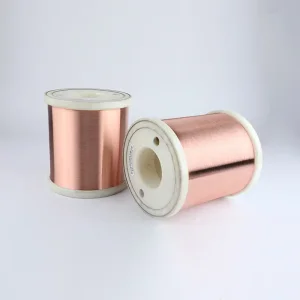
The core process of tinning involves electroplating or hot-dipping high-purity (≥99.9% T1/T2 grade) electrolytic copper with a uniform micro-layer of tin (typically complying with ASTM B33 or BS EN 13602 standards). This tin layer serves as a sacrificial barrier against atmospheric oxygen, sulfur, and moisture, which otherwise trigger rapid copper oxidation. Oxidation generates copper oxide (CuO/Cu₂O)—a compound with poor electrical conductivity that causes localized hot spots, resistance spikes, and systemic electrical degradation.
By preventing oxidation, the tinned layer preserves the solderability of the conductor over a decades-long life expectancy. Furthermore, when working with silicone, EPR, or synthetic rubber insulations that contain sulfur compound curing agents, tinning prevents direct chemical reactions between the copper and the insulation material, preventing premature wire embrittlement.
| Technical Characteristic | Standard Reference / Specification | Engineered Target Values (6mm²) |
|---|---|---|
| Nominal Cross-Sectional Area | DIN EN 60228 / IEC 60228 Class 5 or Class 6 | 6.0 mm² |
| Base Material Grade | GB/T 467-1997 / ASTM B5 (T1 or T2 Red Copper) | Purity ≥ 99.95% Cu |
| Tin Coating Grade & Thickness | ASTM B33 / BS EN 13602 | Hot-dipped / Electrolytic, 1.0 to 2.0 microns |
| Max Electrical Resistance (20°C) | IEC 60228 / DIN VDE 0295 | ≤ 3.30 Ω/km (Tinned Copper) |
| Stranding Construction (Typical Class 5) | Custom Multi-strand fine wire layout | 84 strands × 0.30 mm (or 119 × 0.25 mm) |
| Maximum Ampacity (Reference Ambient 30°C) | Open-Air Installation / Multi-core options | 45A - 63A (Depending on insulation thermal rating) |
| Operating Temperature Thresholds | Insulation dependent (Silicone / XLPE / PVC) | -60°C to +200°C (Silicone jacket variant) |
How procurement managers mitigate volatile commodity costs while maintaining stringent product quality standards.
Global procurement teams must navigate the dual pressures of fluctuating copper raw material indices (LME / SHFE exchange tracking) and the requirement for continuous quality. A poor choice in supplier can lead to off-spec copper purity, inconsistent tin coating, and out-of-round stranding that slows down automated crimping machinery.
To establish a resilient supply chain, EPC (Engineering, Procurement, and Construction) companies and OEMs need to focus on several strategic sourcing criteria:
Where high reliability is non-negotiable: deploying 6mm² conductors across the world's most critical sectors.
Widely used in Electric Vehicle charging infrastructure, battery pack connection terminals, and hybrid powertrain routing. The 6mm² cross-section supports sustained fast-charging currents while minimizing thermal accumulation. Tinned strands withstand the severe vibrational stress typical of mobile automotive applications.
Serves as critical grounding runs, balance of system (BOS) cables, and inter-panel jumpers. Placed in harsh desert or rooftop environments where ultraviolet radiation, rapid diurnal temperature shifts, and moisture condensation accelerate material breakdown, the tinned layer protects copper lines from degradation.
Embedded in drag chains, multi-axis robotic joints, and continuous flexing power tracks. The Class 6 ultra-fine stranded copper layouts are paired with specialized lubrication and jacketing materials, guaranteeing millions of flex cycles without conductor fatigue or copper separation.
Established in 2019 and headquartered in Liushi, the recognized electrical appliance capital of China, Zhejiang Xingma Copper Industry Co., Ltd. has evolved into a premier manufacturer specializing in metal products, copper conductors, and precision stamping assemblies. Our modern manufacturing facility spans a constructed area of over 10,000 square meters, housing a specialized workforce of more than 100 industry professionals.
Equipped with over 300 state-of-the-art domestic machines—including Dingtian wire drawing systems, Fuchuan high-speed bunching machines, pipe twisting equipment, precision braiders, atmospheric annealing furnaces, and advanced stamping presses (up to 160 tons)—our plant operates with an annual production capacity exceeding 2,000 tons of high-grade copper products.
Our commitment to rigorous manufacturing standards is underscored by our successful ISO 9001:2015 quality management system certification and ISO 14001:2015 environmental system certification, achieved in 2020. Recognized as a "Star Enterprise" and "Excellent Production Enterprise" in 2021, we proudly serve as active members of the Zhejiang Cable Accessories Industry Association and the China Forging Association.
Navigating the next generation of wire and cable technology to support high-frequency and high-temperature electrical ecosystems.
As electronic systems shift toward high-power density configurations, the demand for flexible conductors that can operate at elevated thermal margins is climbing rapidly. Xingma Copper's engineering team is actively researching advanced metal alloys and surface plating technologies to push the physical boundaries of standard tinned copper conductors.
Our research and development pipeline centers on three core innovations:
We align our manufacturing operations with the Universal Declaration of Human Rights and key United Nations conventions. Our workforce practices focus on respect, fair labor conditions, and non-discrimination. By combining sustainable manufacturing practices with a green energy supply chain, we help our partners hit their strict Scope 3 ESG targets.
Why industrial procurement teams select Zhejiang Xingma as their long-term supply chain partner.
Located in Liushi, Wenzhou, China's premier electrical capital. We leverage optimized local logistics channels with direct links to China's main domestic centers and major maritime export ports like Ningbo and Shanghai.
Our factory sits adjacent to regional copper trading hubs, securing raw materials at stable pricing indices. This layout minimizes inventory overhead and cushions logistics against supply chain disruptions.
We handle every processing stage in-house—from initial wire drawing and thermal annealing to precise spot welding, custom braiding, and metal hardware stamping. We deliver complete, ready-to-install components.
Backed by years of focused manufacturing, our products meet international quality standards and are exported directly to engineering clients across Europe, the Middle East, and North America.
Technical and logistical insights for engineers, buyers, and operations managers.
The standard ampacity rating of a 6mm² tinned copper stranded wire depends on the insulation jacket's thermal rating and ambient operating temperatures. In free air at an ambient temperature of 30°C, a 6mm² conductor paired with a high-temperature silicone rubber jacket (rated up to 180°C/200°C) can handle continuous currents between 50A and 63A. When bundled, run inside conduits, or used under lower-rated 70°C PVC jackets, derating factors apply, typically bringing the safe running current range to 35A - 42A. Refer to IEC 60364-5-52 for local installation guidelines.
Tinned copper wire features a thin coating of tin over the copper strands. This tin layer prevents copper oxidation, which can lead to high resistance in humid, salty, or chemically aggressive environments. Bare copper wire oxidizes quickly when exposed to air and moisture, forming a non-conductive oxide layer. The tin coating also ensures long-term solderability and protects the wire from chemical reactions with sulfur-cured insulation compounds like synthetic rubber.
These classes are defined by IEC 60228 and DIN VDE 0295. Class 5 designates flexible copper conductors built with standard fine strands (e.g., 84 individual strands of 0.30mm diameter for a 6mm² area). Class 6 denotes ultra-flexible conductors designed with finer wire strands (e.g., 189 strands of 0.20mm diameter). Class 6 conductors are preferred for dynamic applications like robotic joints and continuous flex track chains, whereas Class 5 is ideal for general static cabling requiring easy routing.
Tin has higher electrical resistivity than pure copper. However, because the tin coating is extremely thin (typically 1 to 2 microns) and runs parallel to the copper core, its impact on the overall resistance of the wire is minimal. According to international standards like IEC 60228, the maximum DC resistance of a tinned copper conductor at 20°C is 3.30 Ω/km, which is only slightly higher than the 3.08 Ω/km limit for bare copper. This slight difference is outweighed by the wire's long-term protection against oxidation-induced resistance spikes.
We maintain quality control through our vertically integrated production system. Our process starts with high-purity electrolytic T1/T2 copper, followed by wire drawing, continuous annealing, and automated tinning and stranding. Our quality assurance team conducts testing at every stage—including micro-hardness testing, microscopic inspections of tin thickness, elongation tests, and precision resistance checks—to ensure each batch complies with global standards like ASTM B33 and IEC 60228.
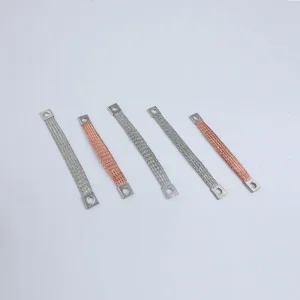
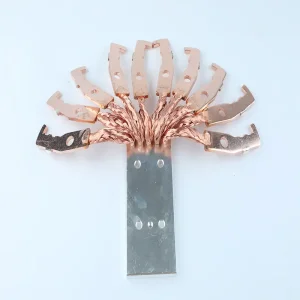
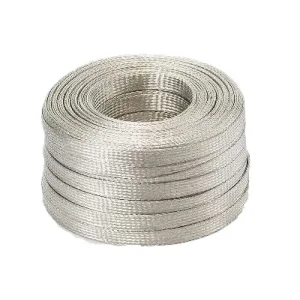
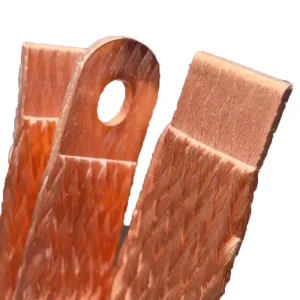
Yes, we specialize in OEM/ODM customization. We can adjust the stranding configuration (altering strand diameters to achieve specific bend ratings), apply custom insulations (PVC, silicone, XLPE, Teflon), or supply copper braids and connections with custom punch-hole configurations. Our technical team works directly from your CAD designs to produce custom prototypes and scale up to high-volume manufacturing runs.
 Xingma