 Xingma
1 / 3
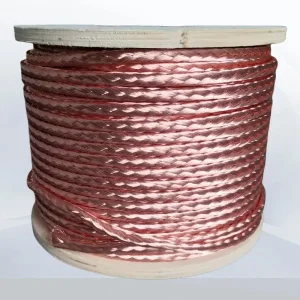
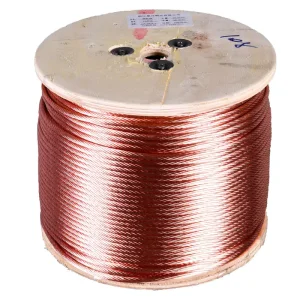
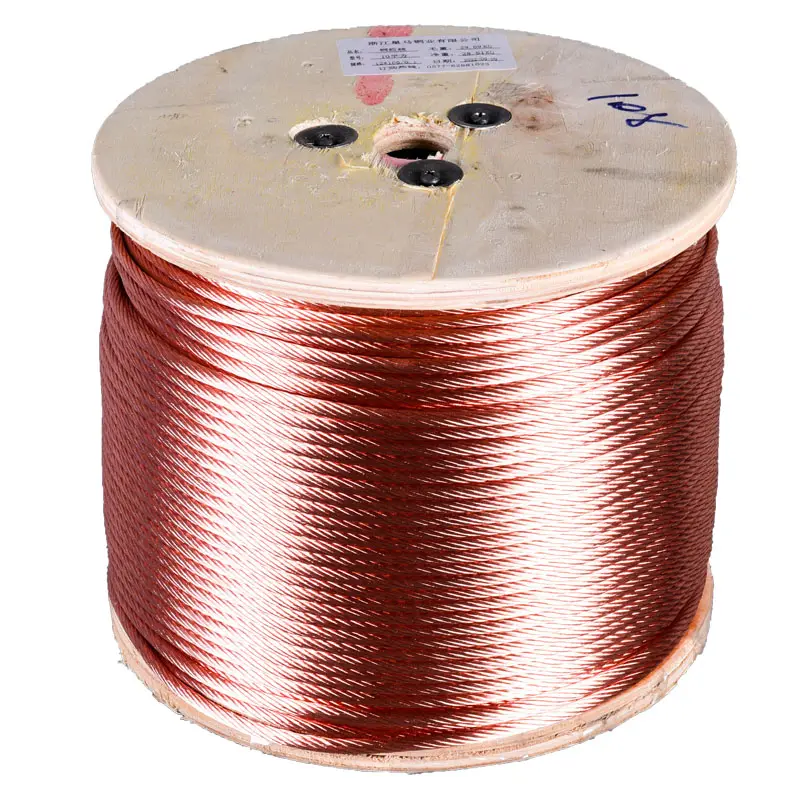
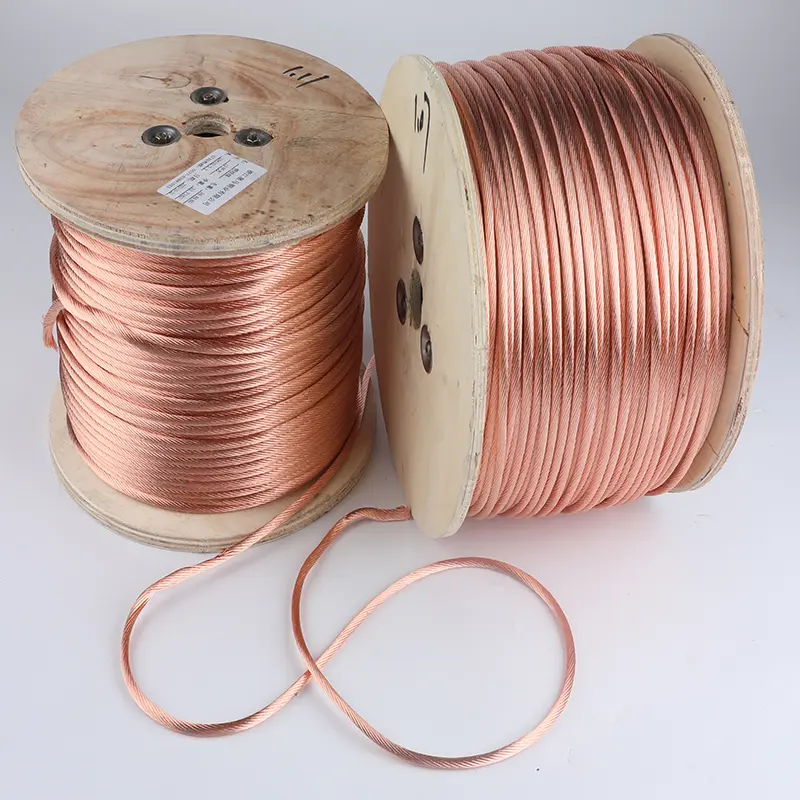
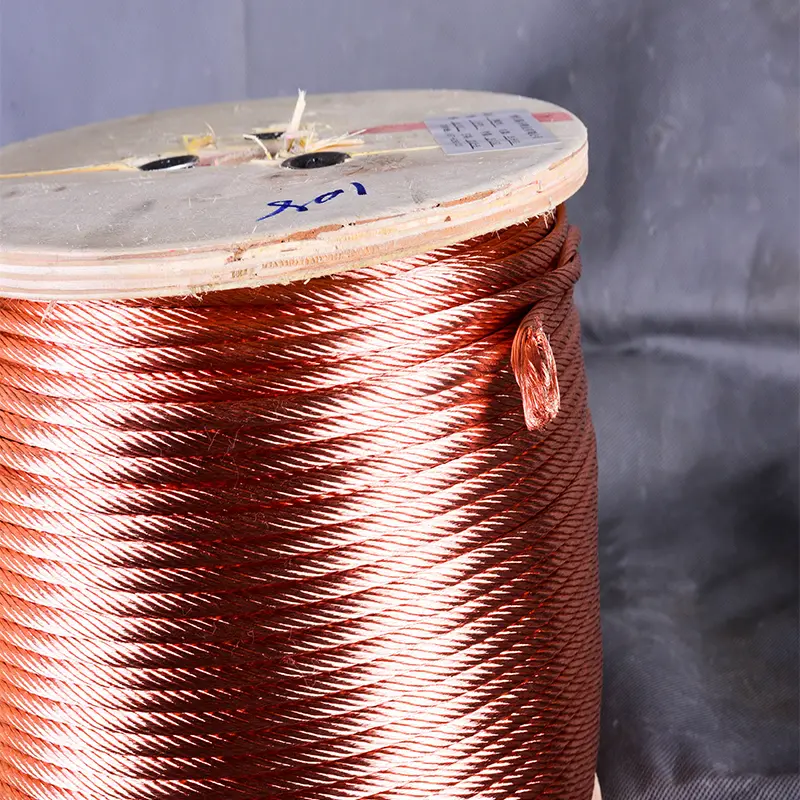
The multi-strand fine copper wire construction allows for easy bending, twisting, and routing, making it ideal for installations in confined spaces or with complex cable paths.
Manufactured from high-purity electrolytic copper (typically ≥99.9%) and annealed, it ensures low resistance and high-efficiency current transmission.
The stranded design distributes mechanical stress, offering a longer service life and higher reliability in applications involving frequent flexing or vibration.
Its inherent flexibility simplifies manual handling. Multiple fine strands form a tighter connection under terminals, reducing hot spots and loosening.
Micro-gaps between strands facilitate airflow, aiding in heat dissipation during high-load operations.
This flexible stranded copper wire is widely used in demanding scenarios requiring reliable connectivity under physical stress. Key applications include complex wiring within distribution cabinets, equipment terminal connections, grounding system jumpers, power supply for mobile equipment, and interconnections in new energy systems. It is particularly suited for high-demand installations where space is limited, or where vibration and frequent flexing are present.
Material: High-purity electrolytic copper (Cu ≥ 99.9%).
Temper: Annealed (softened) for maximum flexibility.
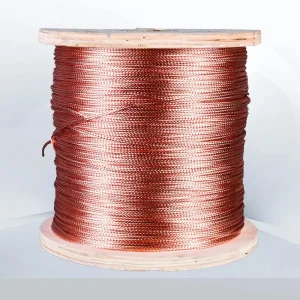
Construction: Comprised of dozens to thousands of fine round copper wires (0.05mm to 0.2mm) spirally stranded.
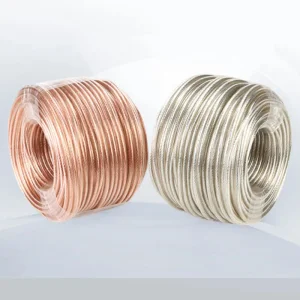
Bare Copper: Most common and cost-effective.
Tinned Copper: Anti-oxidation, corrosion resistance, and improved solderability.
Silver-Plated: For high-frequency performance or lower contact resistance.
Materials: PVC, XLPE, Rubber (Silicone, EPR), Fluoropolymers, etc.
Function: Electrical insulation and mechanical protection based on temperature and chemical resistance needs.
| Nominal CSA mm² | Structure | Rough Weight (km/kg) | |
|---|---|---|---|
| Total Wires | Strands * Wires * Cores / Dia. | ||
| 0.55 | 280 | 8*35/0.05 | 5.33 |
| 0.65 | 336 | 8*42/0.05 | 6.30 |
| 0.75 | 384 | 8*48/0.05 | 7.27 |
| 0.90 | 456 | 8*57/0.05 | 8.72 |
| 1.00 | 512 | 8*64/0.05 | 9.69 |
| 1.50 | 768 | 8*96/0.05 | 14.53 |
| 2.00 | 1024 | 8*128/0.05 | 19.38 |
| 2.50 | 1280 | 8*160/0.05 | 24.22 |
| 3.00 | 1680 | 8*210/0.05 | 29.06 |
| 3.50 | 1784 | 8*223/0.05 | 33.91 |
| 4.00 | 2048 | 8*256/0.05 | 38.75 |
| 4.50 | 2296 | 8*287/0.05 | 43.59 |
| 5.00 | 2560 | 8*320/0.05 | 48.44 |
| 5.50 | 2800 | 8*350/0.05 | 53.28 |
| 6.00 | 3072 | 8*384/0.05 | 58.13 |
| 8.00 | 4080 | 8*510/0.05 | 77.50 |
| 25.00 | 12840 | 12*1070/0.05 | 242.19 |
| 10.00 | 1280 | 8*160/0.1 | 98.67 |
| 12.00 | 1536 | 8*192/0.1 | 118.40 |
| 16.00 | 2040 | 8*255/0.1 | 157.87 |
| 25.00 | 2960 | 8*370/0.1 | 246.68 |
Custom square areas can be manufactured according to specific requirements, with single wire diameters ranging from 0.05mm to 0.15mm. Rectangular braided wires are produced using 8-spindle or 12-spindle braiding machines. Cutting lengths are based on drawings or customer specifications.
A1: High-purity copper (≥99.9%) ensures maximum conductivity and minimal electrical resistance, which prevents overheating and improves energy efficiency.
A2: Stranded wire is much more flexible and resistant to fatigue. It can withstand constant movement and vibration without cracking, making it ideal for mobile equipment.
A3: Annealing involves heating the copper to make it softer and more ductile, which is the essential process for achieving the "flexible" characteristic of the wire.
A4: Yes, depending on the insulation material chosen (such as Silicone or Fluoropolymers), the wire can be rated for various high-temperature applications.
A5: Tinned copper is preferred in humid or corrosive environments to prevent oxidation and to make soldering easier for electrical connections.
A6: Yes, the square area, single wire diameter (0.05mm to 0.15mm), and cutting lengths can be customized according to technical drawings or specific needs.