Engineered for low-loss power transmission, mechanical stress mitigation, and maximum durability under intense heat loads.
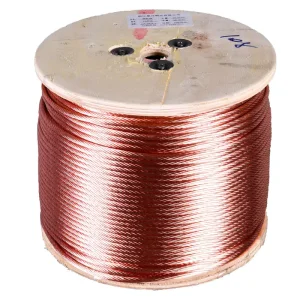
In the era of rapid global industrial electrification, high-power systems demand robust, dynamic electrical pathways that accommodate mechanical stresses and thermal fluctuations. Modern heavy power applications have moved past rigid wiring systems. Custom Copper Braided Flexible Connectors have emerged as the standard solution across international grid operations, massive datacenters, electric vehicular platforms, and advanced renewable infrastructure.
As heavy machinery, battery packs, and transformer units face continuous mechanical vibration, structural expansion, and seismic activities, rigid conductors often crack, causing catastrophic failure. Braided flexible links act as mechanical dampers, protecting sensitive electronics. They neutralize physical stresses and offset high-current expansion forces without compromising electrical throughput.
On a global scale, the rise of EV gigafactories and smart utility grids has created a massive supply bottleneck for high-purity copper components. Modern procurement agents look beyond basic cost calculations, prioritizing structural resilience, compliance guarantees, and optimized geometry to minimize resistive heat loss (I²R losses).
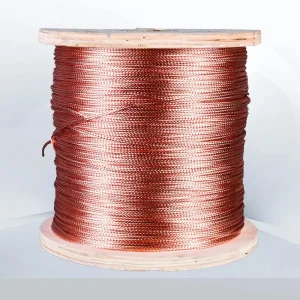
Achieving maximum conductivity requires strict material purity controls and advanced manufacturing methods. High-conductivity flexible connectors are built from high-purity T1/T2 electrolytic red copper (containing ≥99.9% copper content).
We use T1/T2 oxygen-free and electrolytic copper wires with ≥100% IACS electrical conductivity. High purity prevents hydrogen embrittlement and minimizes resistivity under cyclic heat stress.
Tin, nickel, or silver electroplating options are available. Tin plating (typically 3–5 μm) prevents oxidation and corrosion, while silver and nickel coatings are used for high-temperature and harsh marine environments.
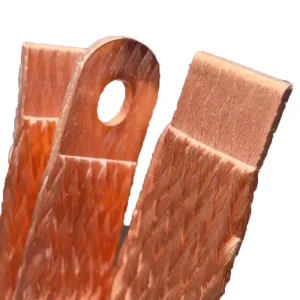
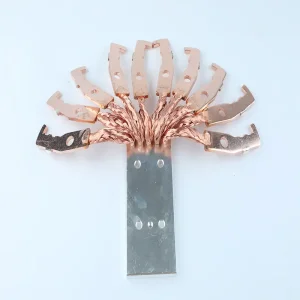
Connectors feature seamless copper tubes pressed onto the braid using high-pressure crimping or molecular diffusion welding (solderless fusion). This ensures low electrical contact resistance at joint interfaces.
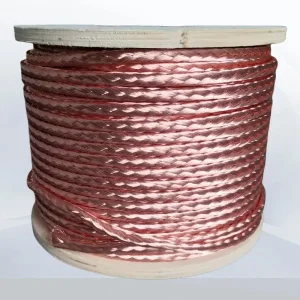
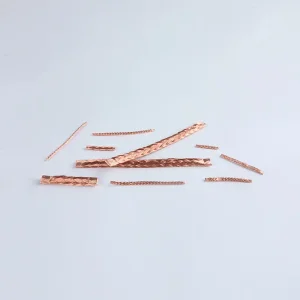
We supply flat braided configurations for tight busbar installations, alongside round tubular braids designed for omnidirectional flex requirements and shielding sleeves.
Braided connectors are designed to counter the skin effect in high-frequency applications. By using hundreds of fine individual copper wires (from 0.05 mm to 0.50 mm in diameter) rather than a solid bar, the total surface area increases. This configuration reduces AC impedance, ensuring reliable performance in switchgear, high-frequency induction furnaces, and power conversion units.
Zhejiang Xingma Copper Industry Co., Ltd. (established in 2019) is located in Liushi, Wenzhou—China's recognized electrical appliance manufacturing capital. Xingma occupies a modern 5,000+ square meter workshop (with an overall building construction area exceeding 10,000 square meters) dedicated to precision metal wire drawing, cabling, and stamping.
To ensure high precision and raw material control, our facility operates over 300 advanced production machines. Our inventory includes Dingtian wire drawing machines, Fuchuan beam machines, pipe twisting machines, precision automatic braiding systems, vacuum annealing furnaces, automatic high-speed cutting units, molecular diffusion welding systems, and heavy-duty 160-ton automatic punch presses.
Our integrated production lines allow us to manage every step in-house, from drawing raw copper rods down to micro-diameter filaments, to final braiding, welding, and plating. This control over the manufacturing process keeps lead times short and ensures consistent quality.
How procurement teams minimize risk by sourcing directly from specialized clusters in China.
Based in Liushi, Wenzhou, our facility benefits from an established local electrical ecosystem. We source high-purity copper and tooling components from nearby suppliers, helping lower production overheads.
From primary wire drawing to complex metal stamping, annealing, and terminal welding, we handle the entire process under one roof to maintain quality control.
Our facility has been certified under ISO9001:2015 and ISO14001:2015 since 2020. Our electrical components comply with REACH, RoHS, and UL safety requirements.
Our close proximity to major deep-water ports like Ningbo and Shanghai enables efficient container loading, customs clearance, and global ocean freight delivery.
Our custom copper braid products are designed to meet the electrical and mechanical requirements of diverse industrial fields:



Answers to technical and engineering questions regarding flexible copper connections.
Explore our full line of flexible connections, chemical additives, and stamping components manufactured to ISO standard tolerances.
 Xingma